When it comes to designing a small bathroom with a shower, finding the right layout is everything. A poor layout can make an already compact space feel cramped, awkward, and frustrating to use every single day. A good one, on the other hand, can make the same square footage feel surprisingly generous — functional, comfortable, and even visually appealing. In this guide, we’ll walk through the layout options that genuinely work in small bathrooms, and explain exactly why each one is effective so you can make the right call for your specific space.
Small bathrooms are one of the most common design challenges homeowners face, and the shower is almost always the element that complicates things most. A shower takes up a meaningful footprint, and where you place it determines where everything else can go — the vanity, the toilet, the door swing, the storage. Get the shower position right, and the rest of the layout tends to fall into place with relative ease. Get it wrong, and you’ll be working against the space at every turn.
The good news is that small bathrooms have been solved beautifully many times over, and there are clear patterns in the layouts that work. Whether you’re working with a narrow galley-style space, a compact square room, or an awkward L-shaped footprint, there’s a layout strategy that will serve you well. The key is understanding the principles behind those layouts — not just copying a floor plan that looks good in a magazine, but understanding why it works so you can adapt it intelligently to your own situation.
Why Layout Matters So Much in Small Bathrooms With Showers
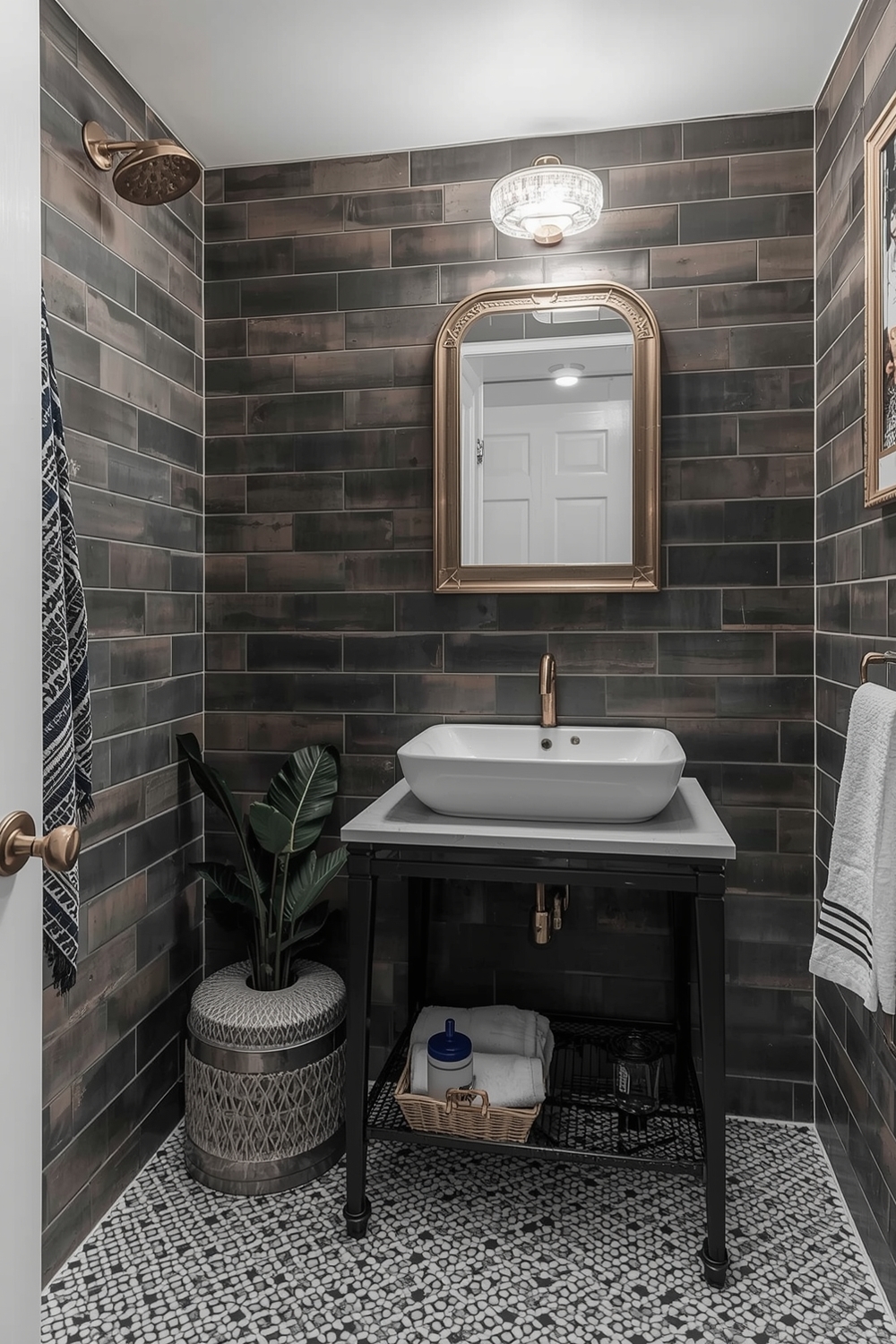
In a large bathroom, you have enough room to forgive layout mistakes. Awkward traffic flow, wasted corners, fixtures that are slightly too close together — a big enough room absorbs these problems without making them obvious. In a small bathroom, there’s no margin for error. Every square foot is doing work, and every decision about where to place the shower, the vanity, and the toilet has consequences that ripple through the entire room.
The shower, in particular, is the element that drives the layout more than anything else. It’s the largest fixture in a small bathroom in most cases, and its position determines the remaining usable floor space, the traffic flow pattern, the placement of natural light sources, and the sense of openness or enclosure you experience when you’re actually in the room. This is why experienced bathroom designers always start with the shower when planning a small bathroom — not because it’s the most glamorous decision, but because it’s the most structurally consequential one.
Traffic flow is another critical consideration that often gets underestimated. A bathroom where you have to squeeze past the vanity to reach the shower, or where the toilet door swings into your path every time you turn around, is a bathroom that will frustrate you every single morning. The best small bathroom layouts prioritize clear, logical movement through the space — you want to be able to walk from the door to any fixture without having to navigate around another one. That sounds basic, but it’s surprisingly easy to miss in the planning stages, especially when you’re working from a floor plan rather than experiencing the space in real life.
Natural light is a third factor that layout decisions directly influence. In a small bathroom, light isn’t just a practical matter — it’s a spatial one. A well-lit bathroom feels larger than it is. A dark, enclosed one feels smaller than it actually is. The placement of the shower relative to the window, and the choice between a solid shower enclosure, a frameless glass screen, or an open wet-room configuration, will all shape how light moves through the room. Layouts that allow light to travel across the full depth of the bathroom — rather than being blocked by a solid shower wall — consistently produce spaces that feel more generous and open.
Storage is perhaps the least glamorous but most practically important consideration in a small bathroom layout. Without adequate storage, even a beautifully designed small bathroom quickly starts to look and feel cluttered. The layout you choose will determine how much wall and floor space you have for storage solutions — and whether those solutions can be built in (which almost always looks better and uses space more efficiently) or will need to be freestanding. Planning for storage from the very beginning, as part of the layout decision rather than as an afterthought, is one of the clearest markers of a well-designed small bathroom.
Key Planning Factors Before Designing a Small Bathroom Layout
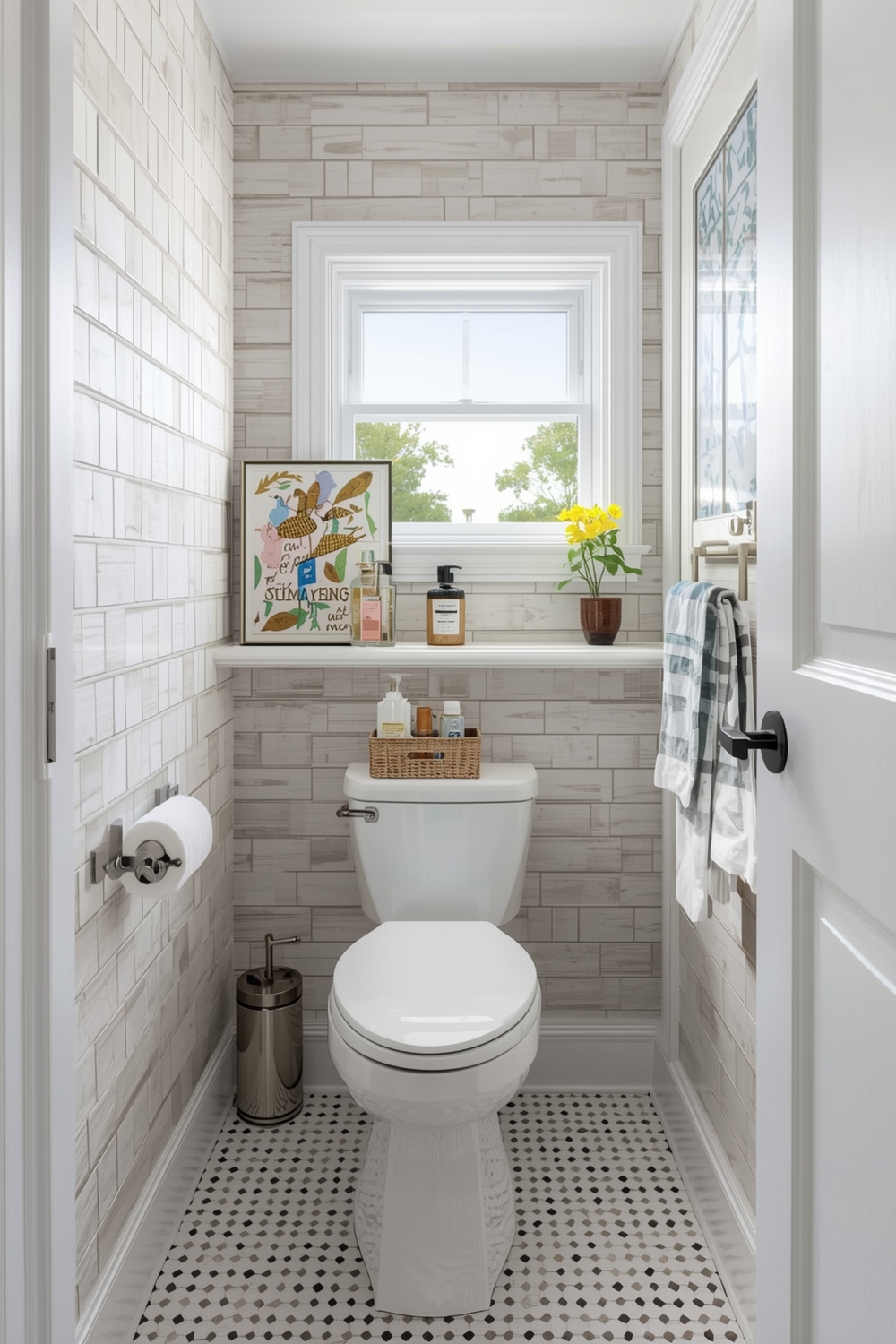
Before you start sketching floor plans or browsing fixture options, there are several foundational factors that should shape every layout decision you make. Getting clear on these early will save you significant time, money, and frustration later.
The Size and Shape of the Room
This seems obvious, but it’s worth stating clearly: the specific dimensions and proportions of your bathroom will determine which layouts are even possible. A narrow, rectangular bathroom that’s five feet wide and eight feet long has a fundamentally different set of layout possibilities than a compact square bathroom that’s six feet by six feet, even if the overall square footage is similar. Before you do anything else, get precise measurements of your space — not just length and width, but the location of the door, the position of any existing windows, the height of the ceiling, and any architectural features like alcoves, sloped ceilings, or load-bearing walls that can’t be moved.
For narrow rectangular bathrooms, the most commonly successful layout is a linear arrangement — shower at one end, toilet in the middle, vanity near the door. This creates a logical sequence through the room and keeps the central floor area as clear as possible. For square bathrooms, a corner shower tends to work beautifully, freeing up the remaining floor space for the vanity and toilet while keeping the room feeling open and organized.
The Location of Existing Plumbing
Plumbing is one of the most significant constraints in any bathroom renovation, and it’s especially relevant in small bathrooms where moving fixtures even a short distance can represent a substantial cost and logistical challenge. The location of your existing water supply lines and drain point will heavily influence where the shower can practically be positioned. Moving a drain, in particular, typically requires opening up the floor and rerouting pipes — an expensive undertaking that’s sometimes worth it for the right layout, but often better avoided if a good layout is achievable within the existing plumbing footprint.
When planning your layout, always start by understanding exactly where your plumbing is. If you can design a layout that works with the existing plumbing rather than against it, you’ll save significantly on labor and materials, and you’ll avoid the disruption of a more extensive renovation. A good plumber can map out what’s feasible in your specific situation before you commit to any layout direction.
Shower Type and Enclosure Options
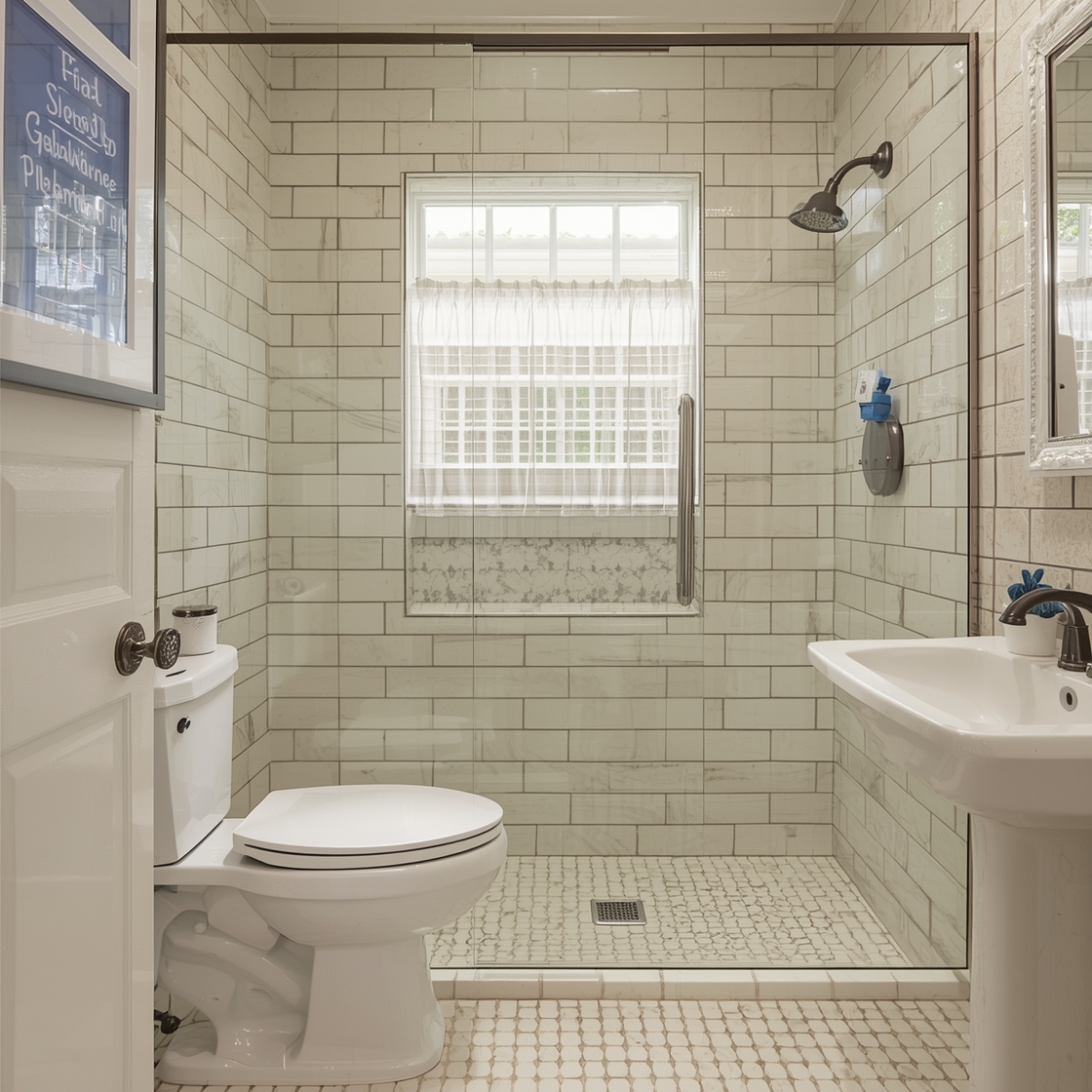
The type of shower you choose will affect the layout options available to you more than almost any other single decision. Walk-in showers without a door or curtain — sometimes called wet room configurations — are an exceptional choice for small bathrooms because they remove the physical and visual barrier of an enclosure, making the space feel dramatically larger than an enclosed shower of the same size. The trade-off is that a wet room requires thorough waterproofing of the entire shower zone, which adds to the renovation cost.
Frameless glass shower enclosures are another excellent option for small bathrooms because glass is visually transparent — it doesn’t block light or divide the room the way a solid partition would. Even a relatively small shower enclosure with frameless glass walls will feel more open and spacious than the same enclosure with opaque walls or a heavy frame. If budget allows, frameless glass is one of the most reliable investments you can make in a small bathroom renovation.
Corner shower units, which fit neatly into one corner of the room, are a space-efficient option that works well in both square and rectangular bathrooms. They leave more open floor space than a shower placed along a full wall, and they create a natural visual boundary between the wet and dry zones of the bathroom without requiring a full partition. Pre-fabricated corner shower kits are available at a wide range of price points and can significantly streamline the installation process.
The Needs of the People Using the Space
Every bathroom is ultimately designed for the people who use it, and understanding those people’s specific needs should inform every layout decision. A bathroom used primarily by one person with mobility considerations needs different clearances and fixture placements than a guest bathroom used occasionally by a variety of visitors. A family bathroom shared by young children needs easy-to-reach storage and a configuration that allows supervision. A master bathroom used by two adults needs enough space at the vanity for two people to use it simultaneously, even in a small footprint.
Think through how the bathroom will actually be used on a typical day — not just how it will look in a photograph — and let that usage pattern guide your layout decisions. The most beautiful floor plan is ultimately only as good as how well it serves the people living with it every day.
Before finalizing your layout, physically walk through it using painter’s tape on the floor to mark the footprint of each fixture. Open and close a stand-in for the shower door, reach for an imaginary faucet, step from one fixture to another. Experiencing the layout at full scale — even in this rough simulation — will reveal problems that a floor plan drawing simply can’t show you.
How Choosing the Right Layout Transforms Your Bathroom
The transformative power of a well-chosen small bathroom layout is genuinely hard to overstate. Two bathrooms with identical square footage can feel completely different — one generous and organized, the other cramped and confusing — based almost entirely on where the fixtures are placed. When the shower is positioned to allow clear traffic flow, when the vanity is placed where it gets the best light, when the storage is integrated rather than tacked on, the whole room snaps into a sense of rightness that you feel every time you use it.
Maximizing storage within the layout is one of the most impactful things you can do. Recessed niches in the shower wall for toiletries, a vanity with drawers rather than open shelving, a mirrored cabinet that doubles the perceived depth of the room while hiding everyday essentials — these are all layout-level decisions that pay dividends in daily comfort and visual clarity. A clutter-free small bathroom always feels larger than it is, and that sense of spaciousness starts at the layout stage.
Creating a sense of visual openness is the other major benefit of a thoughtfully planned layout. When the shower is enclosed in glass rather than tile, when the vanity is wall-hung to reveal more floor, when the layout allows a clear sightline from the door to the far wall without obstruction — the room reads as more spacious than its actual dimensions suggest. These aren’t tricks or illusions, exactly; they’re the natural result of layout decisions that have been made with an understanding of how humans perceive space.
A small bathroom doesn’t have to feel small. With the right layout, thoughtful fixture choices, and a design approach that prioritizes both function and flow, a compact bathroom can become one of the most satisfying rooms in your home — a space where every inch is doing meaningful work, and where the whole is genuinely greater than the sum of its parts.