When it comes to interior design, the 70/30 rule is a fundamental concept that can truly transform the look and feel of your space. By understanding the principles of balance and proportion, you can create a harmonious and visually appealing environment that reflects your personal style. So, what exactly is the 70/30 rule in decorating, and how can it impact your home design?
If you’ve ever looked at a professionally designed room and felt that it just worked — without being able to articulate exactly why — there’s a strong chance the 70/30 rule was at play. It’s one of those principles that operates quietly in the background of great interiors, invisible when applied correctly and glaringly obvious when ignored. Understanding how it works doesn’t require a design degree or years of experience. It requires a clear explanation and the willingness to observe your own space honestly. That’s precisely what this guide offers.
Why Balance and Proportion Matter in Interior Design
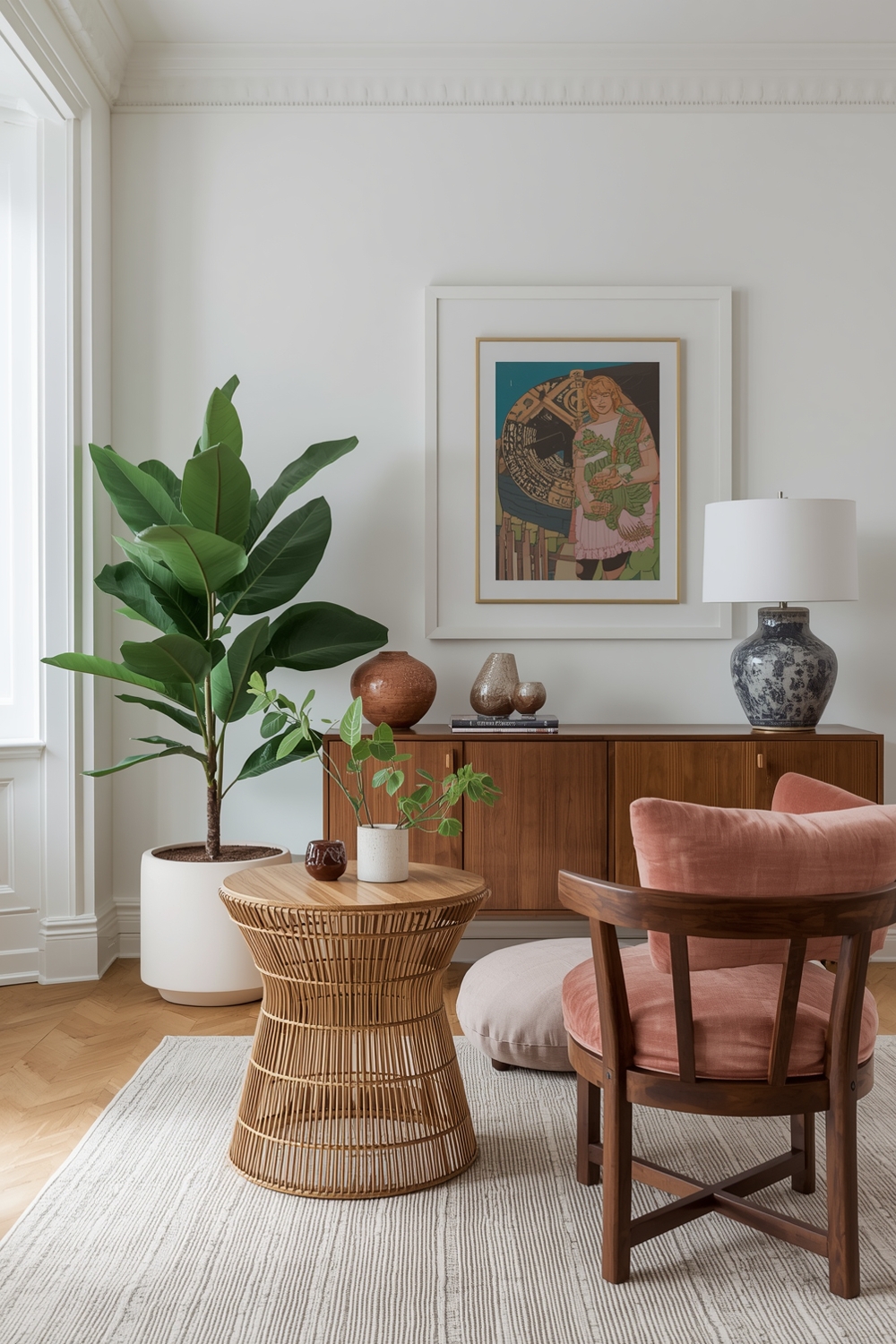
The 70/30 rule in interior design refers to the ideal ratio of colors in a room. This concept suggests that 70% of the room should be a dominant color, 30% should be a secondary color, and accents should make up the remaining 10%. By following this color ratio, you can achieve a sense of balance and harmony in your space, creating a cohesive and visually appealing look.
To understand why this ratio works, it helps to think about what happens in a room that doesn’t follow any proportion principle at all. Imagine a living room where every surface is a different color — a red sofa, yellow curtains, green walls, an orange rug, blue cushions, purple artwork. Each element may be beautiful in isolation, but together they create visual chaos. The eye doesn’t know where to settle. There’s no hierarchy, no dominant story — just noise. This is the problem that the 70/30 rule solves.
The human eye and brain are pattern-seeking systems. When we enter a room, we unconsciously scan for a dominant visual theme — a primary color or tone that establishes the character of the space — and then read everything else in relation to it. When that dominant theme is clear and consistent, the room feels settled and composed. When it’s absent or muddled, the room feels unsettled and busy, even if you can’t immediately identify why. The 70/30 rule provides the dominant theme by ensuring that one color covers the majority of the room’s visual field, creating the anchor that allows everything else to make sense.
Balance in interior design is not the same as symmetry, and this distinction matters. A perfectly symmetrical room — identical furniture on both sides, matched accessories, everything centered and even — can feel rigid and lifeless. Visual balance is something subtler: it’s the sense that the room’s visual weight is distributed in a way that feels stable and intentional. The 70/30 split creates this kind of balance through proportion rather than mirroring. The dominant 70% establishes stability; the secondary 30% introduces variety and movement without destabilizing the whole.
Proportion, more broadly, is one of the most critical and least discussed factors in interior design quality. Two rooms with identical furniture can feel entirely different depending on how those pieces are proportioned relative to the room’s architecture. A sofa that’s too small for its wall looks lost; a coffee table that’s too large for its seating arrangement looks overbearing. The 70/30 rule is essentially a proportion principle applied specifically to color and visual weight — a framework for ensuring that the relationship between dominant and secondary elements is calibrated in a way that the eye finds naturally pleasing.
Key Ways Designers Apply the 70/30 Rule in Rooms
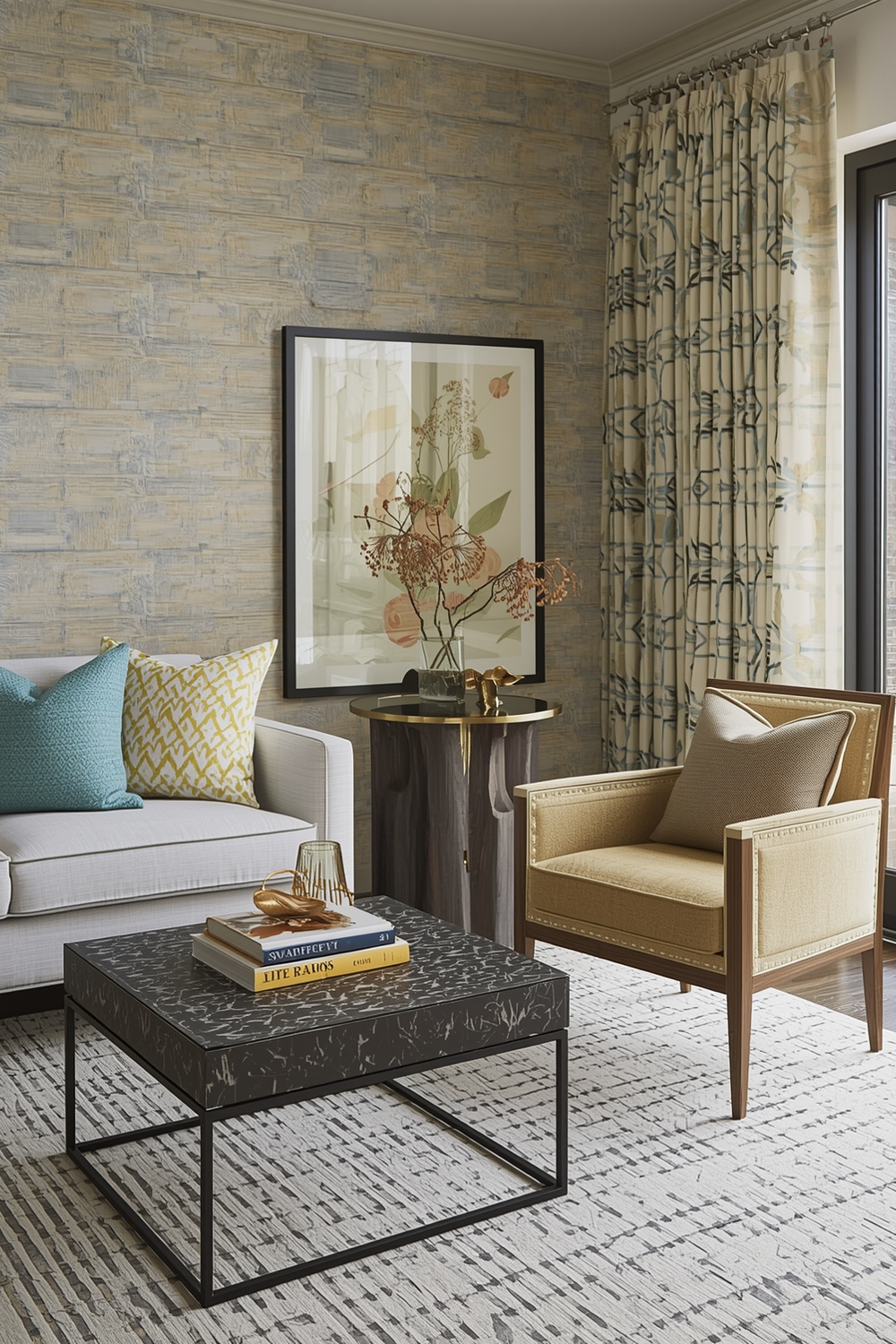
Designers apply the 70/30 rule in various ways to create stunning interiors. Whether through paint colors, furniture, or accessories, maintaining the right balance of colors is essential for achieving a well-designed room. By carefully selecting a dominant color, a secondary color, and complementary accents, you can elevate the aesthetic of any space.
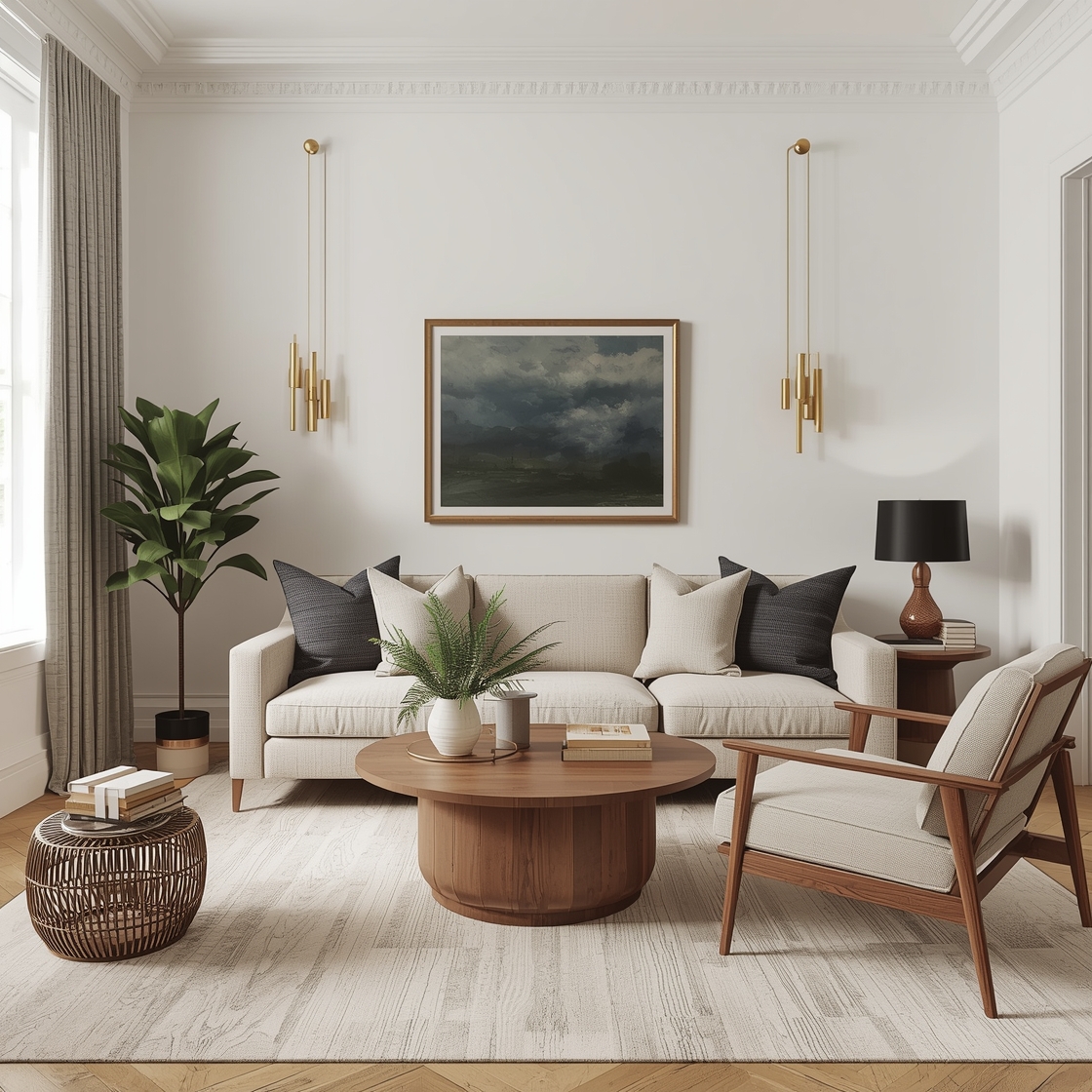
In practice, the 70% dominant layer is most commonly carried by the room’s largest surfaces: the walls, the floor, and the largest pieces of furniture. In a living room, this might mean a warm off-white on the walls, a light oak hardwood floor, and a large sectional sofa in a soft neutral linen — all working together in the same general color family to establish the room’s visual foundation. The fact that these surfaces are different materials with different textures adds richness and depth, but because they share a similar tonal quality, they read as a cohesive whole rather than a collection of competing elements.
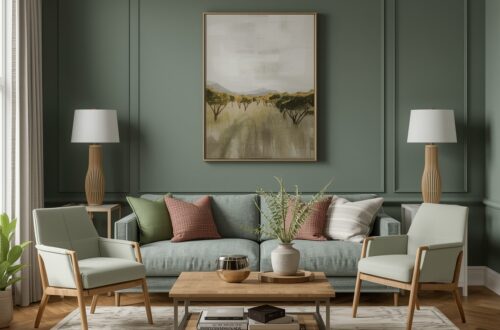
The secondary 30% is where a room’s personality really begins to emerge. This layer might be expressed through a pair of accent chairs in a complementary color, a substantial area rug with a pattern that introduces a second hue, curtains in a contrasting fabric, or a piece of large-scale artwork that brings a distinct color into the space. The secondary color should be chosen with care — it needs to relate to the dominant color in a meaningful way, either through complementary contrast (warm against cool), tonal harmony (a deeper shade of the same family), or shared undertone. A secondary color that clashes with the dominant tone creates tension rather than contrast, and tension is not the same thing as interest.
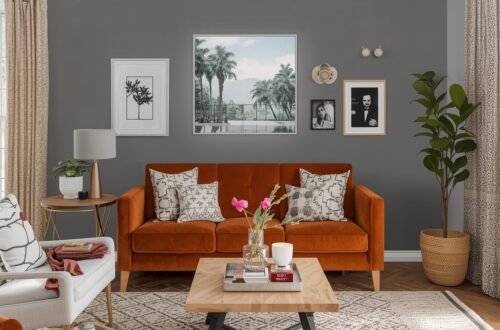
The accent layer — technically the remaining 10% in the full 60/30/10 version of the rule — is where small objects, decorative accessories, metallic finishes, cushion covers, throws, and botanicals live. This is the layer that can and should be bolder than the rest, because its visual impact is modulated by its quantity. A single vase in a deep jewel-toned color against a neutral backdrop draws the eye beautifully; that same color covering 40% of the room would be overwhelming. The accent layer is the place to bring in the colors you love most intensely — the ones you couldn’t imagine living with on every wall — because used in small, considered doses, they add exactly the kind of punctuation that makes a composed room feel alive rather than sterile.
It’s worth noting that the 70/30 rule applies to more than just color. Experienced designers use it as a framework for balancing texture, pattern, and even furniture style. In a room with a dominant smooth, matte texture (plaster walls, a linen sofa, a concrete coffee table), the secondary layer might introduce some warmth and roughness through a jute rug or a rough-hewn wooden side table, while the accent layer adds shine through brass hardware or glass accessories. The ratios keep the overall effect from becoming monotonous on one hand or chaotic on the other.
How the 70/30 Rule Improves Your Space Practically
Implementing the 70/30 rule in your interior design can drastically improve the look and feel of your home — not just visually, but in terms of how the space actually feels to inhabit. A room that follows the rule tends to feel more spacious, more restful, and more considered than one that doesn’t, even when the two rooms contain the same furniture and the same square footage.
One of the most immediate practical benefits is that the rule simplifies decision-making. One of the most common challenges in decorating a room is the paralysis that comes from too many options — you love a dozen different colors, you’re drawn to multiple styles, and you can’t figure out how to make them coexist without the room looking incoherent. The 70/30 framework resolves this by giving you a structure: choose one dominant color for the majority of the space, choose one secondary color that complements it, and then layer in accents freely within those boundaries. The framework doesn’t restrict your creativity — it gives it a structure to work within, which paradoxically produces more creative results than total freedom.
The rule also makes it significantly easier to add to or update a room over time. When your dominant color is clearly established, adding new pieces becomes a matter of deciding which layer they belong to and whether they’re consistent with the color family of that layer. New cushions, a new piece of art, a new side table — as long as you know whether it’s meant to sit in the dominant, secondary, or accent layer, and you choose accordingly, the room continues to feel coherent rather than accumulating into visual clutter.
Rooms that apply the 70/30 principle also tend to photograph better, which matters in an era when people share their homes on social media and want spaces that look as good in images as they do in person. The visual clarity created by a strong dominant color provides the kind of backdrop that allows individual elements to stand out without competing with each other — which is exactly what makes an interior photograph well.
Common Mistakes People Make When Applying the 70/30 Rule
The 70/30 rule is simple in concept, but it’s easier to get wrong in practice than it might appear. The most common mistake is misjudging what counts as the dominant color. Many people focus exclusively on wall paint when thinking about the dominant layer, forgetting that a large sofa, a dominant rug, or extensive built-in cabinetry all contribute significant visual weight to the color equation. If your walls are a soft gray but your floor is a warm-toned wood and your sofa is a warm beige, the room may actually read as warmer than the gray walls suggest — because the warm-toned elements collectively outweigh the cool walls in visual surface area.
A second common error is choosing a secondary color that’s too close to the dominant color in value (lightness or darkness) rather than in hue. When the dominant and secondary colors are similar in value as well as hue, the room can feel flat and one-dimensional, as if painted entirely in one color rather than thoughtfully layered. A slight contrast in value — a deeper secondary against a lighter dominant, or vice versa — adds the dimension and interest that makes the layering visible and effective.
The opposite mistake — choosing a secondary color that contrasts too aggressively with the dominant — is equally problematic. A high-contrast pairing can work brilliantly when handled with skill, but in inexperienced hands it tends to produce a room that feels tense and unsettled rather than dynamic and interesting. The best secondary colors have a clear, logical relationship to the dominant — they share an undertone, they sit adjacent on the color wheel, or they represent a deeper or lighter value of the same family — that makes the pairing feel intentional rather than arbitrary.
Over-accessorizing the accent layer is the third most frequent mistake. The entire point of the accent layer is that it’s used sparingly — small quantities of bold color or distinctive texture that draw the eye precisely because they stand out from the quieter dominant and secondary layers. When too many objects compete for accent status, the layer loses its power. A few carefully chosen, well-placed accents are dramatically more effective than dozens of competing pieces, however individually beautiful they may be.
Applying the 70/30 Rule Room by Room
The rule applies across all rooms but expresses itself differently depending on each space’s purpose and typical contents. In a living room, the dominant layer is usually the walls and largest seating piece, the secondary layer is expressed through a rug, curtains, or accent chairs, and the accent layer lives in cushions, throws, plants, and decorative objects. The relatively high volume of objects in a living room means the accent layer is fairly rich, but because those objects are small, their individual visual weight is low.
In a bedroom, the proportions shift slightly because the bedding covers such a significant portion of the room’s visual field. A bed with substantial pillows and a duvet takes up a great deal of visual space, which means it often functions as part of the secondary layer rather than the dominant one. The dominant layer in a bedroom is typically the walls and floor, the secondary layer is the bedding and major upholstered pieces, and the accent layer is everything else — lamps, artwork, decorative cushions, plants, and small objects on bedside tables.
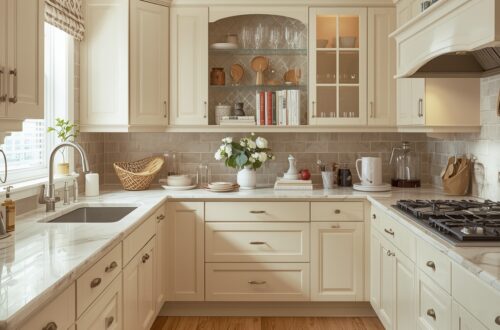
In a kitchen, where cabinets and countertops dominate the visual field, the dominant layer is often the cabinetry color or finish, the secondary layer is the countertop material and backsplash, and the accent layer is hardware, small appliances, plants, and any decorative elements. The rule is particularly useful in kitchen design because it helps prevent the common mistake of trying to do too much in a space that already has a high density of fixed elements.
Final Thoughts: A Rule Worth Understanding and Using
The 70/30 rule is not a constraint on creative expression — it’s a framework that makes creative expression more effective. By establishing clear proportional relationships between a room’s dominant color, its secondary color, and its accent elements, the rule creates the visual hierarchy and balance that allow a space to feel simultaneously composed and interesting. It’s the difference between a room that looks designed and one that looks decorated — and it’s a difference that’s immediately, intuitively perceptible to anyone who walks into the space, even if they couldn’t name the principle behind it. Learn to see it, practice applying it, and your rooms will reward you with a level of cohesion and calm that no amount of expensive furniture or trendy accessories can manufacture on its own.