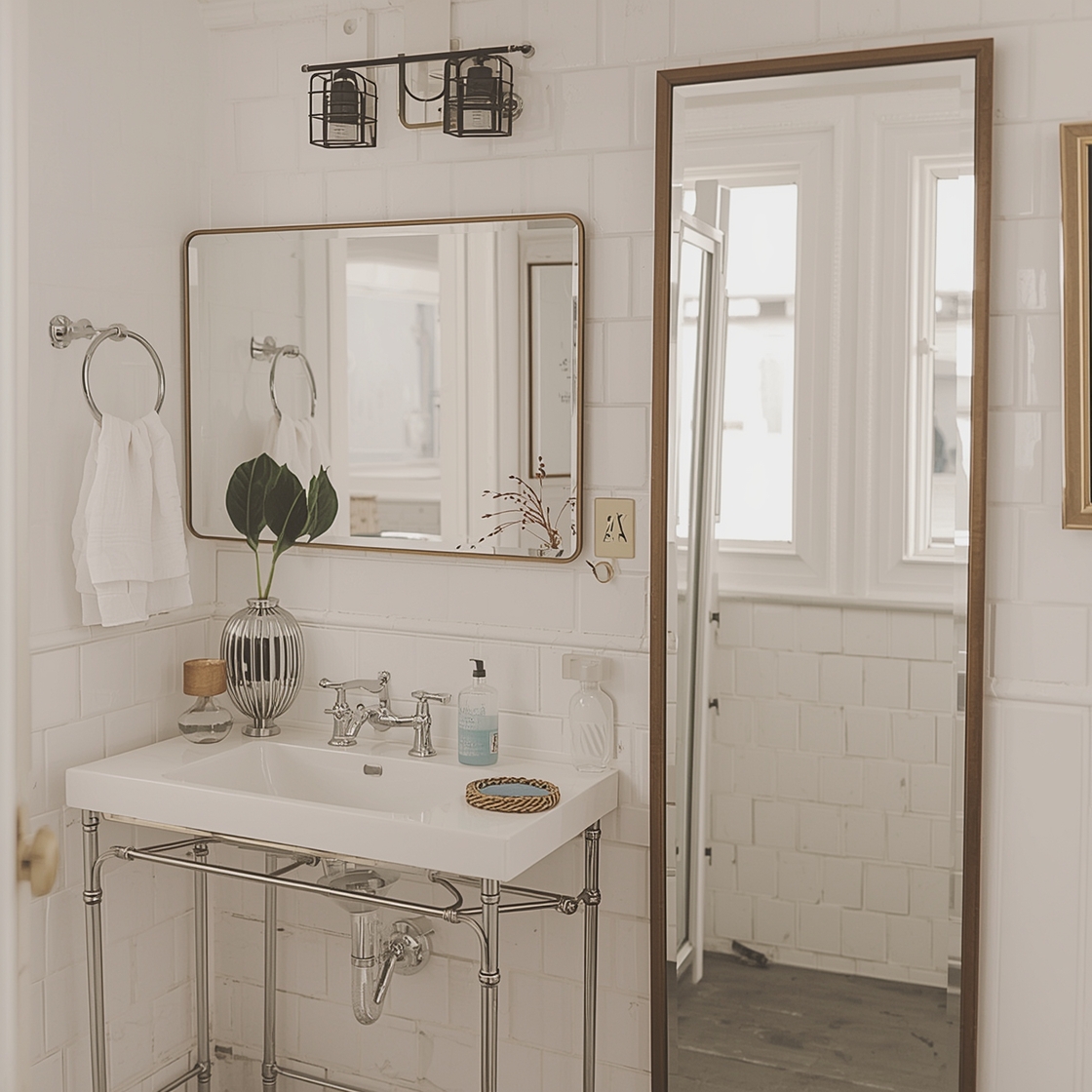
Are you looking to maximize the space in your small bathroom? The secret might just lie in the strategic placement of mirrors. When used correctly, mirrors are one of the most effective and affordable tools in interior design for making a compact bathroom feel noticeably larger, brighter, and more open. In this article, we’ll explore exactly how mirrors create that sense of expanded space — and more importantly, how to use them in your own bathroom to get the best possible result.
There’s a reason mirrors have been used in interior design for centuries to manipulate the perceived size of a room. The effect isn’t a trick or an illusion exactly — it’s a direct result of how human vision and spatial perception work. When we see a reflection, our brains register it as an extension of the physical space rather than a surface. The room in the mirror reads as more room, and the visual boundary of the actual wall effectively disappears. In a small bathroom where every square foot matters, that perceptual expansion is genuinely valuable.
But mirrors only deliver this effect when they’re placed and sized thoughtfully. A small mirror hung in the wrong spot can actually make a bathroom feel more enclosed by creating an awkward focal point that draws attention to the room’s limitations rather than disguising them. The difference between a mirror that works and one that doesn’t is almost entirely about placement, scale, and how it interacts with the light in the room. Get those things right, and a single mirror can transform the way your bathroom feels without touching a single tile.
Why Mirrors Can Visually Expand Small Bathrooms
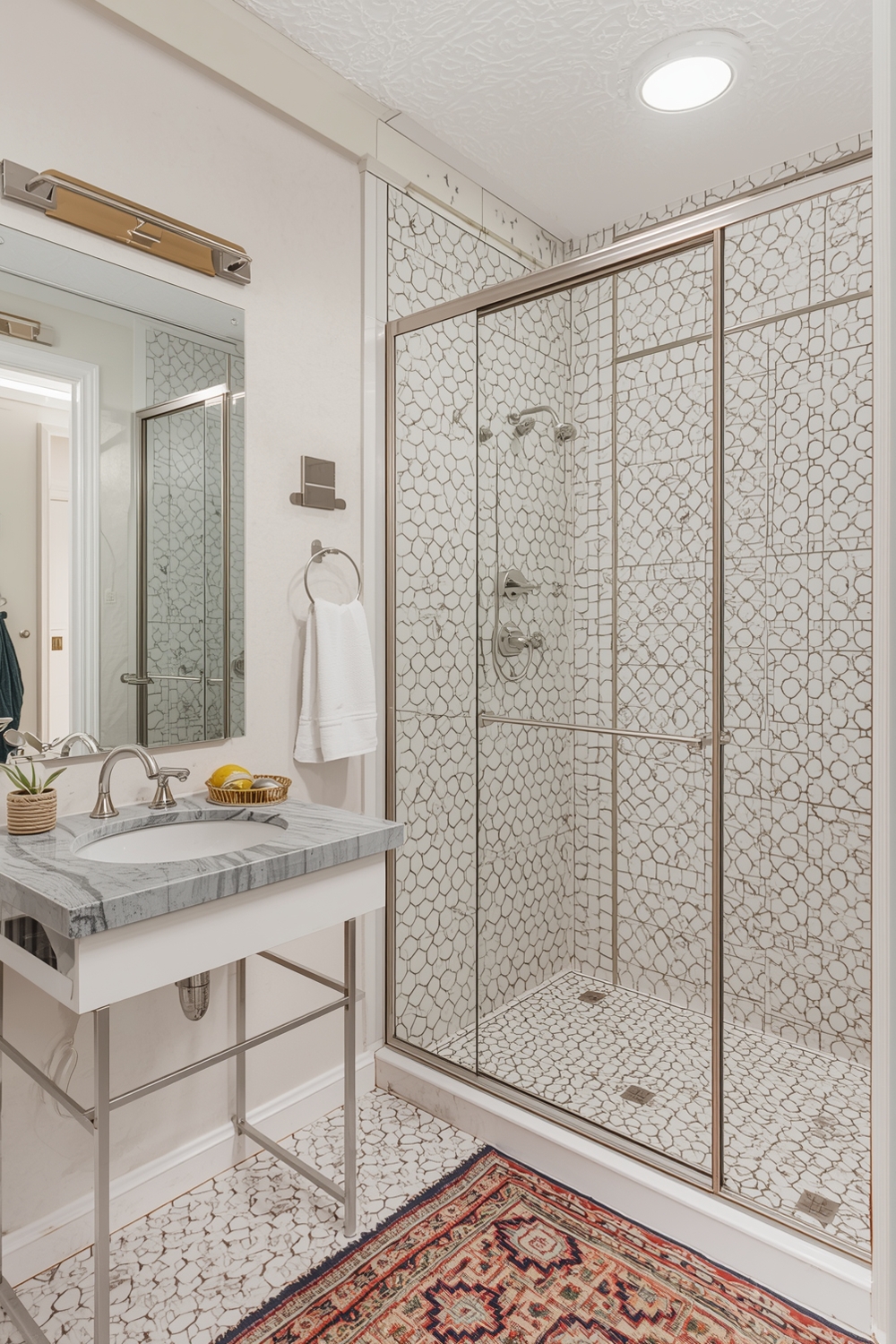
Mirrors are one of the most powerful tools in interior design, especially in small spaces like bathrooms. To understand why they work so well, it helps to think about what a mirror actually does to the visual environment of a room. When you look into a mirror, you see a reflected image of whatever is on the opposite side — which, in a bathroom, is typically more of the room itself. That reflection creates the impression that the space continues beyond the mirror’s surface. The wall, in effect, ceases to be a boundary and becomes a window into a parallel version of the room.
This is especially powerful in bathrooms because the rooms tend to be narrow and enclosed by nature. The walls are close, the ceiling feels lower, and there’s often limited natural light to compensate. A well-placed mirror disrupts that sense of enclosure by introducing a visual depth that wasn’t there before. Where the wall was a hard stop, the mirror creates a sense of continuation — and our perception of the room’s size shifts accordingly.
Light amplification is the other major mechanism at work. Mirrors reflect not just images but light itself, bouncing natural or artificial light around the room and brightening areas that would otherwise sit in shadow. In a small bathroom with a single overhead fixture, the light tends to fall straight down and create a flat, slightly oppressive quality. Introduce a mirror, and suddenly that light is being redirected — bouncing off the reflective surface and reaching into corners that the original fixture couldn’t touch. The room gets brighter, and a brighter room always reads as larger than a dim one.
The effect is even more pronounced when the mirror is positioned opposite or adjacent to a window. Natural daylight entering through the window is captured by the mirror and reflected back across the room, dramatically increasing the perceived luminosity of the space. On a sunny morning, a well-placed mirror in a small bathroom can make the room feel flooded with light — a sensation that’s not just aesthetically pleasing but genuinely transformative in terms of how spacious the bathroom feels.
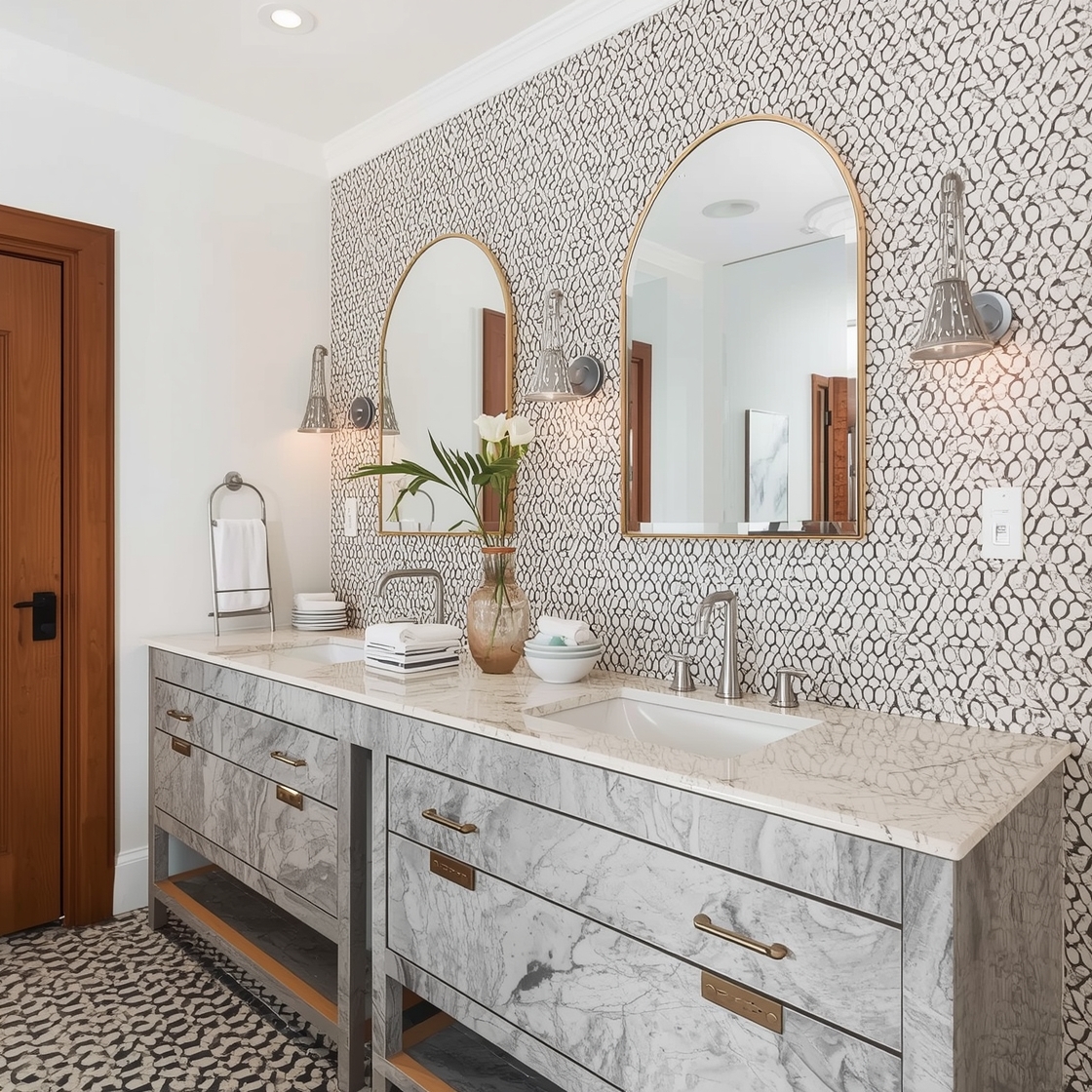
Scale plays a crucial role too. A larger mirror reflects more of the room and creates a proportionally larger sense of expanded space. This is counterintuitive to some homeowners, who instinctively feel that a smaller room should get smaller accessories to avoid overwhelming it. In reality, the opposite is usually true. A small mirror in a small bathroom looks timid and fails to make much of a spatial impact. A large mirror — one that fills a significant portion of the wall — changes the room fundamentally. For more inspiration on how different mirror styles and sizes can be incorporated into a bathroom, the bathroom mirror design gallery at DecorHomePlace is a great visual resource to explore before making any decisions.
There’s also a vertical dimension to consider. Mirrors that extend close to the ceiling — especially in bathrooms with lower ceilings — draw the eye upward and create a sense of vertical height that makes the room feel taller. This vertical visual extension is one of the most underused tricks in small bathroom design, and it costs nothing extra if you’re already planning to hang a mirror.
Key Mirror Placement Strategies for Small Bathrooms
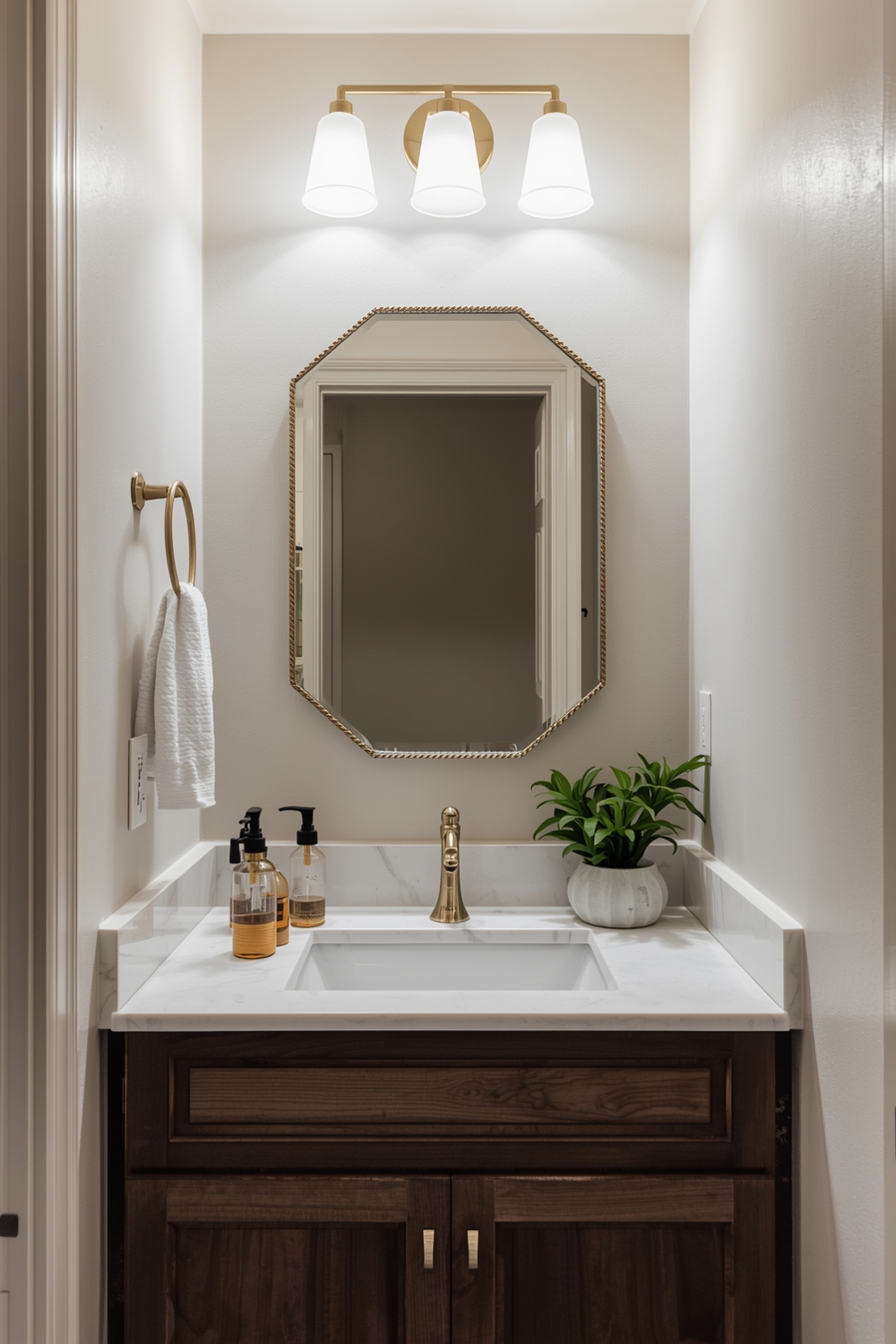
Understanding why mirrors work is one thing — knowing where and how to place them to get the maximum effect in your specific bathroom is another. When it comes to maximizing the spatial impact of mirrors in a small bathroom, placement is everything. The same mirror can look extraordinary in one position and completely unremarkable in another. These strategies will help you make the right call for your space.
Place the Mirror Opposite or Adjacent to the Light Source
This is the single most impactful placement principle for any mirror in a small bathroom. When a mirror faces a window or a light fixture, it captures that light and reflects it back into the room, dramatically increasing the overall brightness. In a bathroom where the window is on the wall above or beside the sink, a large mirror on the wall opposite the window will reflect the incoming natural light back across the full depth of the room. On a bright day, the effect can be remarkable — the bathroom feels almost double its actual size because the light is now present on both sides of the space.
If your bathroom has no window, or very limited natural light, consider placing a well-lit mirror — one with integrated side lighting or a backlit design — on the main wall. The direct light source combined with the reflective surface creates a similar effect to natural light amplification, and backlit mirrors in particular have a way of making small bathrooms feel warm and luminous rather than closed-in and dim.
Go Large: The Full-Width Vanity Mirror
One of the most reliable moves in small bathroom design is replacing a standard-sized mirror above the sink with one that spans the full width of the vanity — or ideally, the full width of the wall. A mirror that runs from one side of the room to the other has a near-seamless quality that makes the wall it occupies effectively disappear. The room looks wider, the vanity area looks more generous, and the overall sense of enclosure diminishes significantly.
This doesn’t have to be expensive. A simple frameless rectangular mirror cut to the full width of the wall is one of the most cost-effective ways to dramatically transform a small bathroom. Frameless mirrors tend to work better than heavily framed ones in small spaces because the frame introduces another visual element that can make the mirror feel like a piece of furniture rather than an extension of the room. The less the mirror draws attention to itself as an object, the more effectively it functions as a spatial expander.
Consider a Full-Length Mirror on an Unused Wall
If your bathroom has a wall that isn’t occupied by a fixture or storage unit — often the wall opposite the vanity, or the wall beside the toilet — a full-length mirror installed there can add a second layer of spatial expansion beyond what the vanity mirror alone provides. When two mirrors in a room face each other at an angle (not directly opposite, which creates an infinite-reflection effect that can feel disorienting), the result is a sense of depth on multiple sides of the room simultaneously. The bathroom feels like it extends in several directions at once, and the effect on perceived size is substantial.
A full-length mirror also has practical advantages in a bathroom — it allows you to check your full appearance before leaving the house, which is something many small bathrooms with limited mirrors don’t accommodate well. When a single design element solves both a spatial problem and a practical one, that’s almost always worth prioritizing.
Mirrored Storage: Function Meets Illusion
A mirrored medicine cabinet or mirrored vanity cabinet is one of the smartest investments you can make in a small bathroom because it addresses two of the most common small-space problems simultaneously: insufficient storage and insufficient visual depth. The mirrored front of the cabinet does the same spatial work as any other large mirror — reflecting light, creating depth, visually extending the wall — while the cabinet itself provides concealed storage for toiletries, medications, and daily essentials that would otherwise sit on a cluttered countertop.
A clutter-free bathroom always looks larger than a cluttered one, so mirrored storage achieves its spatial effect through two mechanisms at once: the reflective surface directly and the decluttering effect indirectly. This compounding benefit is why designers almost universally recommend mirrored cabinets over standard open shelving in small bathrooms.
Avoid These Common Mirror Mistakes
Knowing what not to do is just as valuable as knowing what works. One of the most common mistakes in small bathroom mirror placement is hanging a mirror too high on the wall. A mirror that sits above eye level doesn’t serve its spatial purpose effectively — it reflects the ceiling rather than the room, and it creates a visual disconnect that makes the space feel off-balance. Mirrors should be centered at roughly eye level, which for most adults is around five to five and a half feet from the floor.
Another frequent error is choosing a mirror with a very decorative, ornate frame in a small bathroom. While a statement mirror can look beautiful in a larger space where it functions as a focal point, in a small bathroom it tends to add visual weight rather than removing it. A heavily framed mirror draws the eye to the mirror itself rather than through it, and the perceived spatial expansion you’re hoping for is diminished. Save the decorative frames for larger rooms and keep small bathroom mirrors as clean and simple as possible.
Finally, be cautious about placing mirrors directly above the toilet. This placement can feel uncomfortable and creates an odd visual focal point that most people find awkward. Mirrors work best in bathrooms when they’re positioned in areas of natural activity — above the vanity, along a main wall where you’d naturally look while moving through the space, or opposite the point of entry so the reflection is the first thing you see when you open the door.
Before drilling a single hole, hold your mirror up against the wall at the intended position and height — have someone help you, or prop it temporarily — and spend a few minutes moving around the bathroom observing what it reflects from different angles. You’re looking for a position where the reflection captures as much of the room’s depth and light as possible. This simple test will save you from the frustration of repositioning a mirror after it’s already been installed.
The Bigger Picture: Mirrors as Part of a Cohesive Small Bathroom Strategy
Mirrors are extraordinary tools, but they work best when they’re part of a broader approach to making a small bathroom feel larger rather than a standalone intervention. Pairing a well-placed mirror with other space-expanding strategies — light-colored walls and tiles that reflect rather than absorb light, a wall-hung vanity that reveals more floor space, frameless glass shower enclosures that keep sightlines open, recessed lighting that eliminates the shadowy corners that make small rooms feel smaller — produces results that are genuinely impressive.
The goal in a small bathroom isn’t to trick anyone into thinking the room is a different size than it actually is. It’s to remove the visual obstacles that make a room feel smaller than it needs to — the enclosed corners, the blocked sightlines, the dim spots, the cluttered surfaces — so that the actual space can present itself at its best. Mirrors are one of the most effective and accessible ways to do that, and their impact on how a small bathroom feels day-to-day is something that most homeowners notice almost immediately after installation.
You don’t need to renovate your bathroom, rip out tiles, or spend thousands of dollars to change how it feels. Sometimes, one large mirror in the right place is enough to make a bathroom that felt cramped and oppressive feel comfortable and bright. That’s a remarkable return on a relatively modest investment — and it’s exactly the kind of design solution that makes interior design so satisfying when it comes together well.