When it comes to kitchen design, one of the most persistent and passionately debated questions is whether open shelves are a genuinely good idea or a decision you will quickly come to regret. Some homeowners swear by the functionality and aesthetic appeal of open kitchen shelving — pointing to the way it opens up a space visually, makes everyday items more accessible, and transforms a purely functional room into something that feels curated, warm, and full of personality. Others prefer the reassuring reliability of traditional closed cabinets, valuing their ability to hide clutter, reduce maintenance demands, and keep a kitchen looking effortlessly tidy regardless of what is actually stored inside them. In this guide, we will take a genuinely honest and balanced look at both sides of this debate, exploring the real pros and cons of open kitchen shelving in detail so that you can make a fully informed decision about whether open shelves are the right fit for your kitchen, your lifestyle, and your daily habits.
The truth, as is so often the case with design questions that inspire strong feelings on both sides, is that open shelves are neither universally brilliant nor universally terrible. They are a design choice with real, meaningful advantages and equally real, meaningful disadvantages — and whether they represent a wise decision or a frustrating mistake depends almost entirely on who is making the choice, what kind of kitchen they are working with, and how honestly they are willing to assess their own habits, preferences, and willingness to commit to the upkeep that open shelving genuinely demands. With that spirit of honest assessment in mind, let us dive in.
Why Open Kitchen Shelves Became a Popular Design Trend
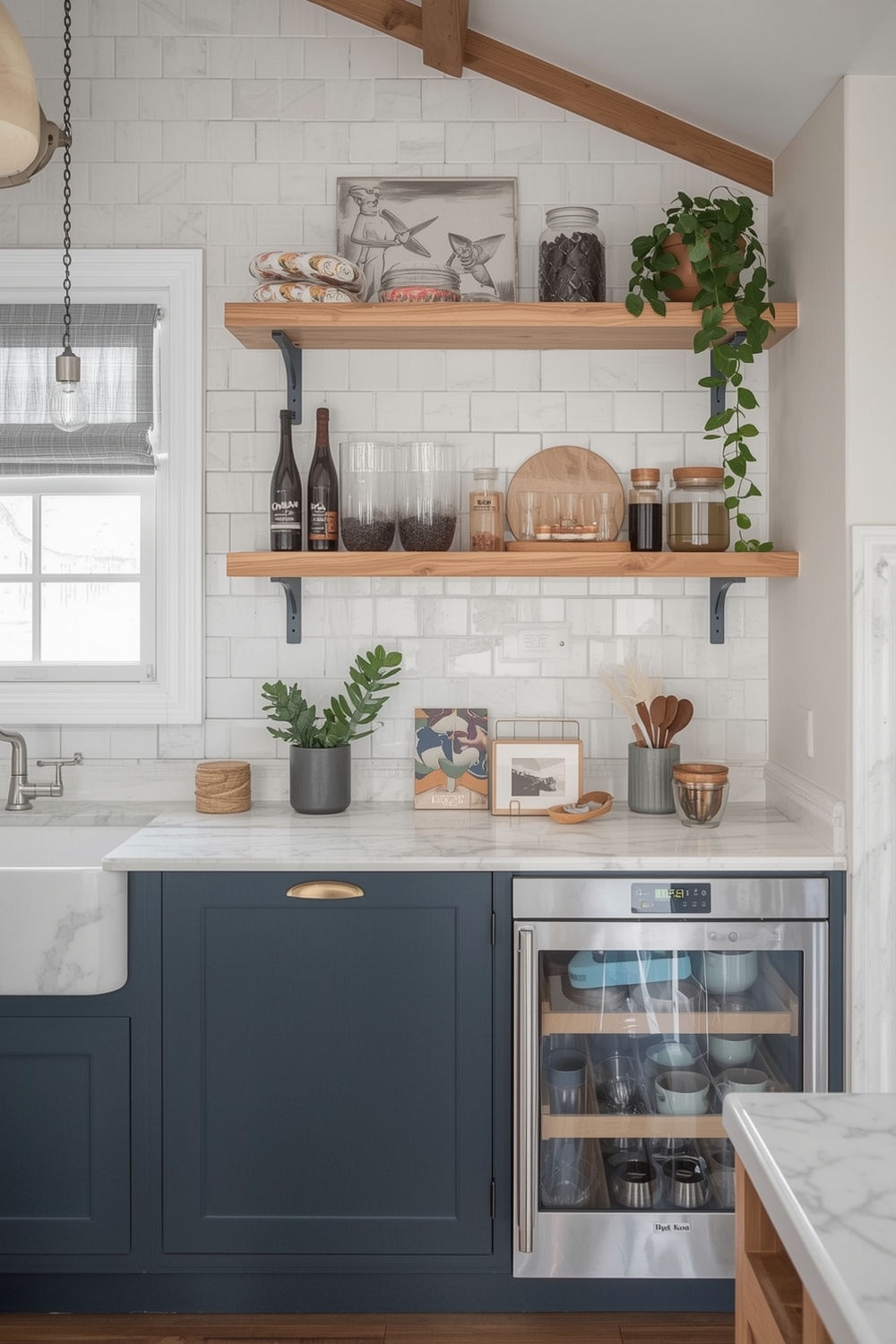
Open kitchen shelves have gained remarkable popularity in recent years for several compelling and intersecting reasons. One of the most obvious and immediately appealing advantages is the visual impact they bring to a space. Open shelves create an open, airy, and expansive feel that closed upper cabinets simply cannot replicate — they remove the visual weight of solid cabinet doors from the upper half of the kitchen walls, allowing the eye to travel freely around the room and making even a modestly sized kitchen feel noticeably larger and more inviting. In kitchens where natural light is limited, this effect can be particularly transformative, as the absence of bulky upper cabinetry allows light to bounce more freely around the space and reach corners that might otherwise feel dim and closed-in.
The practical accessibility argument has also been a powerful driver of the trend’s popularity. When your everyday plates, glasses, mugs, and bowls are displayed openly on shelves rather than hidden behind cabinet doors, reaching for what you need while cooking becomes faster, easier, and considerably less disruptive. There is no hunting through stacked plates behind a closed door or wrestling with awkwardly positioned cabinet hinges when your hands are full. Everything you use daily is right there in front of you, immediately visible and immediately reachable. For people who cook regularly and value efficiency in the kitchen, this accessibility advantage is genuinely significant and not to be dismissed.
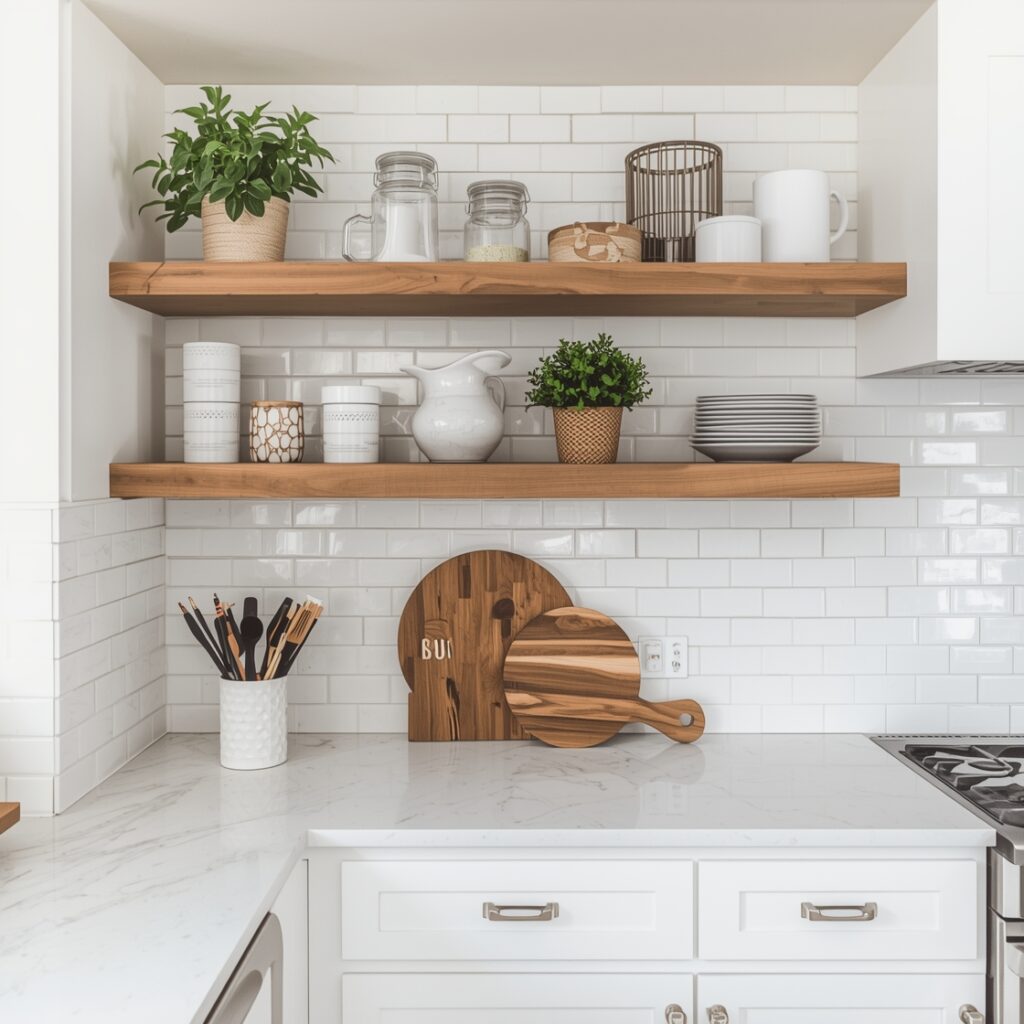
The broader cultural shift toward more open, informal, and personality-driven home interiors has also played a significant role in open shelving’s rise. As the kitchen evolved from a purely functional back-of-house space into the social heart of the modern home, homeowners increasingly began treating it as an extension of their living space — a room that should reflect their personality, their aesthetic sensibilities, and their way of life just as much as their sitting room or dining room. Open shelves fit beautifully into this philosophy. They invite you to curate your kitchen the way you might curate a bookshelf — thoughtfully arranging objects, mixing functional pieces with decorative ones, and creating a visual story about who you are and how you live. A well-styled set of open kitchen shelves, with its mix of beautiful ceramics, well-chosen glassware, small plants, cookbooks, and carefully arranged everyday items, can genuinely function as a piece of living décor that adds enormous warmth and character to the room.
Social media has amplified all of these factors considerably. The highly visual world of kitchen design content on platforms like Instagram and Pinterest is particularly well-suited to showcasing the photogenic appeal of beautifully styled open shelves, and the resulting images — all warm wood, artfully arranged ceramics, and carefully color-coordinated stacks of plates — have inspired enormous numbers of homeowners to consider open shelving for their own kitchens. It is worth bearing in mind, of course, that the immaculately styled open shelves in those photographs represent the absolute best-case scenario, photographed at the perfect moment under perfect lighting conditions — and that the reality of living with open shelves on a daily basis can look rather different. But the aspirational power of those images is real, and it has done more than almost anything else to drive the trend forward.
The sustainability and transparency arguments have also contributed to open shelving’s appeal, particularly among younger homeowners who tend to be more environmentally conscious and value transparency in their consumption choices. Open shelves use less material than full cabinet systems — no doors, no hinges, no complex internal hardware — which reduces both cost and environmental impact. They also have an inherent honesty about them: what you see is what is there, encouraging a more intentional and less accumulative approach to kitchenware that resonates with a broader cultural move away from excess and toward more considered, quality-over-quantity consumption.
Key Factors to Consider Before Installing Open Kitchen Shelves
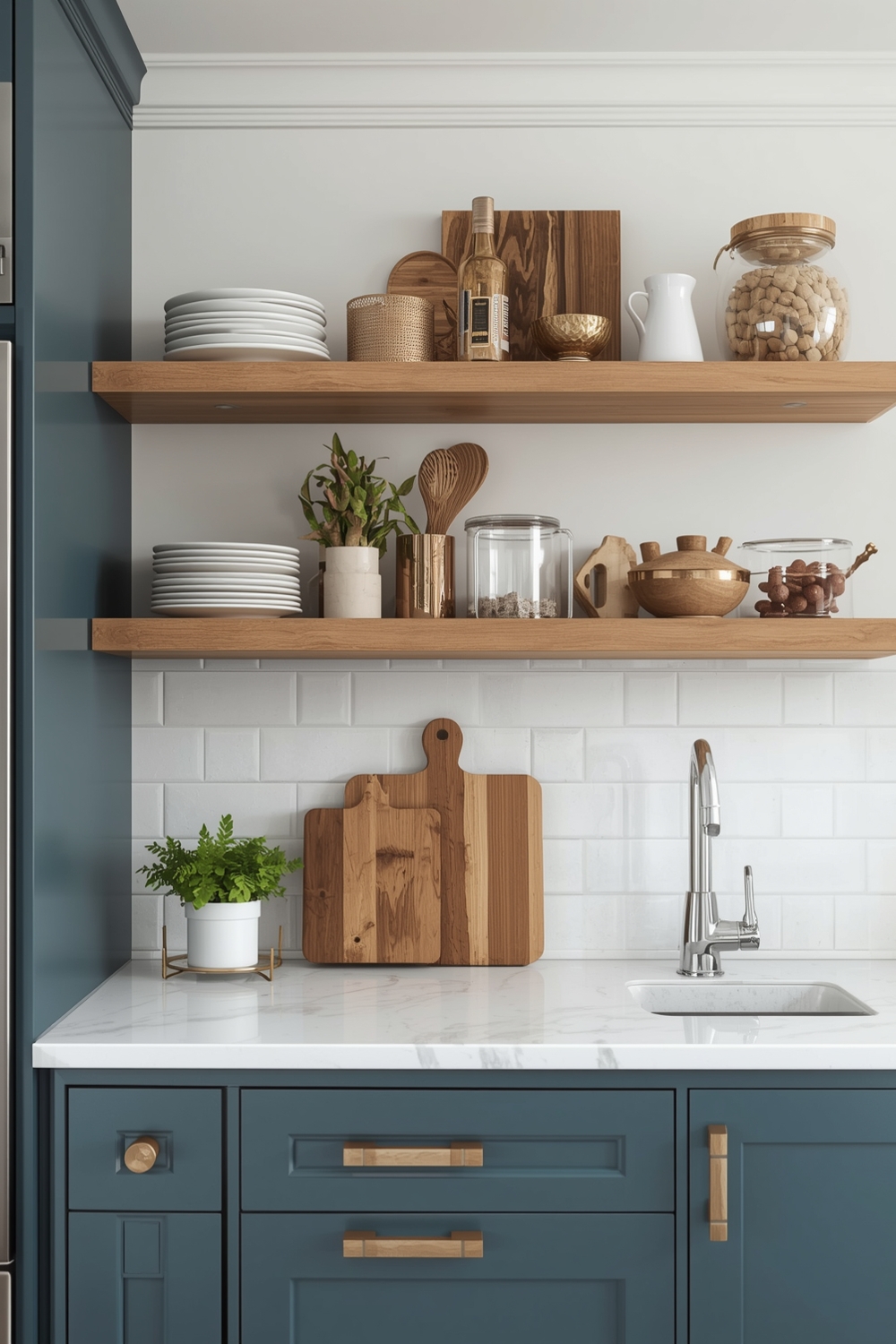
Before jumping on the open shelving bandwagon, it is absolutely crucial to consider a number of key factors honestly and realistically — because while open shelves can look extraordinary when done well, they also demand a level of ongoing commitment that not every homeowner is either able or willing to provide. Understanding these demands upfront is the difference between a design decision you will cherish and one you will be quietly regretting within a few months of installation.
The Maintenance Reality: This is, without question, the most significant practical downside of open kitchen shelving, and it is the one that trips up the most people who romanticize the look without fully accounting for the daily reality. Open shelves require constant, consistent maintenance to keep them looking the way they do in those inspiring photographs. Dust accumulates on exposed surfaces continuously, and in a kitchen environment, that dust quickly combines with ambient grease and cooking vapors to create a sticky, grimy film that is considerably less pleasant to deal with than the dry dust you might find on a bookshelf in another room. Items stored near the stove are particularly vulnerable to this grease accumulation, and the cleaning required to keep them looking presentable is not a once-a-week wipe-down situation — it is a genuinely ongoing, daily commitment. If you are someone who loves the idea of open shelves but is honest enough to admit that regular, meticulous cleaning is not really your strong suit, this is a serious consideration that deserves real weight in your decision-making process.
The Organization Commitment: Open shelves are, in a very real sense, permanently on display — which means that the level of organization you might comfortably maintain behind closed cabinet doors simply will not cut it on open shelves visible to everyone who enters your kitchen. Every item needs to be in its designated place, every stack needs to be neat, and the overall visual composition needs to be consistently considered and intentional. This is genuinely achievable for people who are naturally organized and who find satisfaction in maintaining tidy, curated spaces. But for those who tend to let dishes pile up, who have mismatched kitchenware accumulated over years of different purchases, or who simply do not have the bandwidth to treat their kitchen storage as an ongoing styling project, open shelves can quickly begin to look chaotic and stressful rather than warm and inviting.
The Clutter Question: Related to the organization challenge is the clutter question, and this is perhaps the most honest and self-revealing test you can apply before committing to open shelves. Take a long, clear-eyed look at the inside of your kitchen cabinets right now. What do you see? If the answer is neatly organized rows of matching or complementary pieces that you would feel genuinely comfortable displaying publicly, open shelves may well work beautifully for you. If the answer is a jumbled accumulation of mismatched plates, half-used condiments, mystery Tupperware lids, and items you cannot quite remember purchasing, open shelves will not solve that problem — they will simply put it on display for everyone to see. Open shelves reward intentional kitchenware curation; they do not forgive the inevitable detritus of a busy household in the way that a closed cabinet door so mercifully does.
Your Kitchen’s Cooking Style: The way you actually cook in your kitchen on a daily basis should also factor heavily into your open shelving decision. If your kitchen is primarily a place for relatively light, occasional cooking — a space where you make breakfast, prepare simple weeknight dinners, and occasionally bake — open shelves may be entirely manageable from a grease and dust accumulation standpoint. But if you are an enthusiastic, frequent cook who regularly produces elaborate meals, fries things, makes sauces that splatter, and generally uses the kitchen to its full, vigorous potential, the rate at which grease and steam will settle on exposed open shelving items will be considerably higher. Serious home cooks often find, somewhat counterintuitively, that open shelves create more work and more frustration in a heavily used kitchen than the clean practicality of well-planned closed storage.
The Aesthetic Commitment: Finally, it is worth thinking carefully about the aesthetic commitment that open shelves represent — specifically, the commitment to maintaining a consistently styled and visually coherent display over the long term. In the early days after installation, when everything is freshly arranged and the styling is at its most considered, open shelves tend to look magnificent. The challenge comes six months or a year later, when the initial enthusiasm has settled and the daily reality of a busy life has begun to assert itself. Items get put back in slightly the wrong places. New purchases that do not quite match the existing collection begin to appear. A few ugly but necessary items find their way onto the shelves because there is simply nowhere else for them to go. Keeping open shelves looking as good as they did on day one requires a sustained aesthetic commitment that is worth honestly assessing before you make the initial investment.
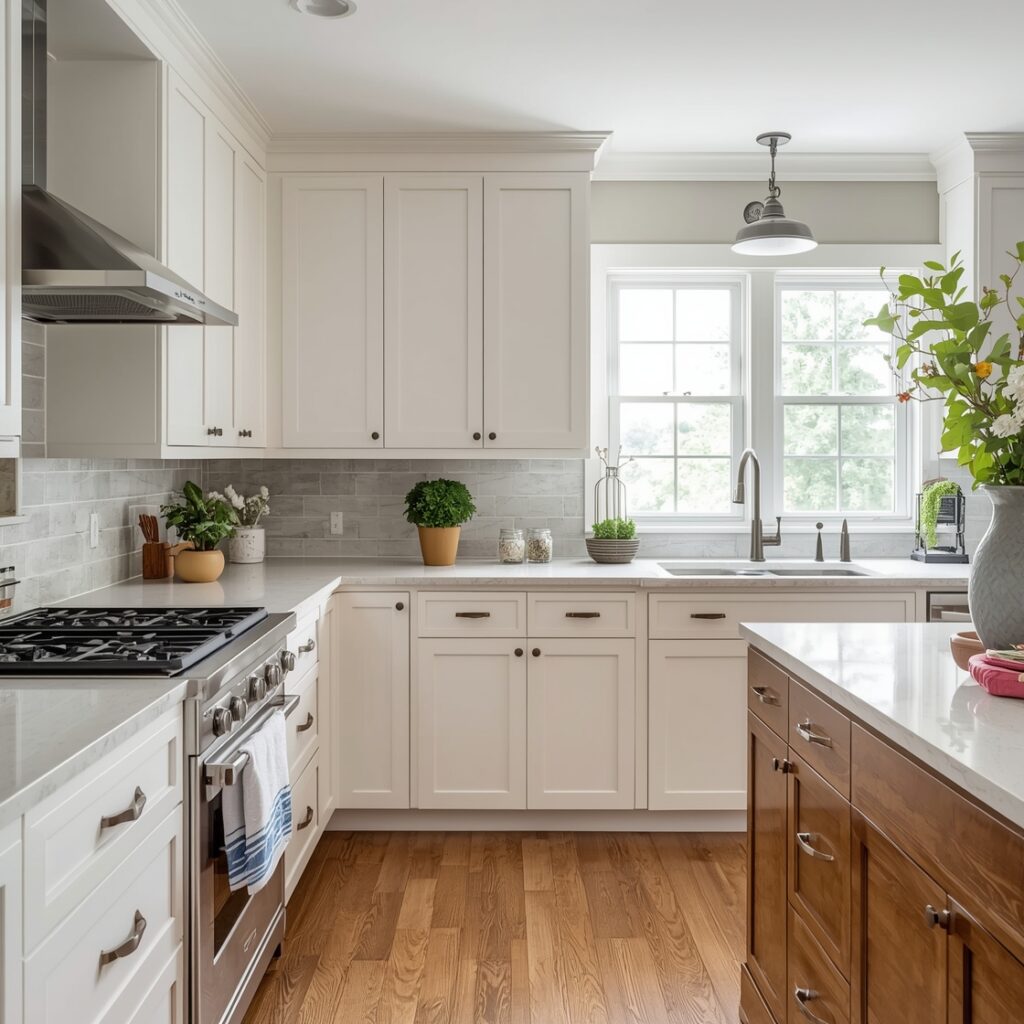
The Best Approach: A Hybrid Solution For many homeowners, the most satisfying and practical resolution to the open shelves debate is a hybrid approach that captures the aesthetic and functional advantages of both options. This typically means retaining closed lower cabinetry — where the bulk of your less photogenic kitchen storage lives — while incorporating open shelving in the upper zone where it can do the most visual work for the least practical compromise. This hybrid arrangement lets you enjoy the open, airy feel that upper open shelves provide, display your most beautiful and frequently used items in an accessible and visually pleasing way, and still maintain the reassuring clutter-hiding capacity of enclosed lower storage for everything else. It is a genuinely thoughtful middle ground that tends to deliver the best of both worlds, and it is the approach that many experienced kitchen designers will recommend when asked for an honest opinion.
Ultimately, open shelves are a design choice that rewards honesty above almost any other quality. Be honest about your cleaning habits, your organizational tendencies, your kitchenware situation, your cooking style, and your realistic capacity for sustained aesthetic maintenance — and you will almost certainly arrive at the right answer for your specific situation. Open shelves can be genuinely transformative in the right kitchen for the right person. They can also be a source of ongoing low-level stress and regret in the wrong kitchen for the wrong person. The difference lies almost entirely in the quality of the self-assessment you bring to the decision before the first shelf bracket goes into the wall.