Are you looking to make your blue room feel warmer and more inviting without giving up the color you love? Blue is one of the most popular colors in interior design for good reason — it’s calming, sophisticated, and endlessly versatile. But it comes with a well-known challenge: depending on the shade, the lighting, and what surrounds it, a blue room can tip from serene into downright cold. The good news is that warmth isn’t about abandoning blue. It’s about understanding what makes blue feel chilly in the first place, and making very specific, targeted changes to counteract it.
This is a problem designers solve regularly, and the solutions aren’t complicated once you understand the underlying principles. A room painted in the most beautiful shade of slate blue can feel like a hotel hallway if it’s furnished with cool-toned materials under flat overhead lighting. The same room, with warm-toned wood, layered textiles, and soft amber light, can feel like one of the coziest spaces in the house. The blue hasn’t changed. Everything around it has — and that’s the insight that unlocks the whole approach.
Whether you’re dealing with a navy bedroom that feels like a cave, a powder blue living room that reads as chilly and clinical, or a slate-painted kitchen that never quite feels welcoming, the strategies in this guide will give you a clear, actionable path to a warmer result — without touching a single drop of paint if you don’t want to.
Why Blue Rooms Often Feel Cold in Home Interiors
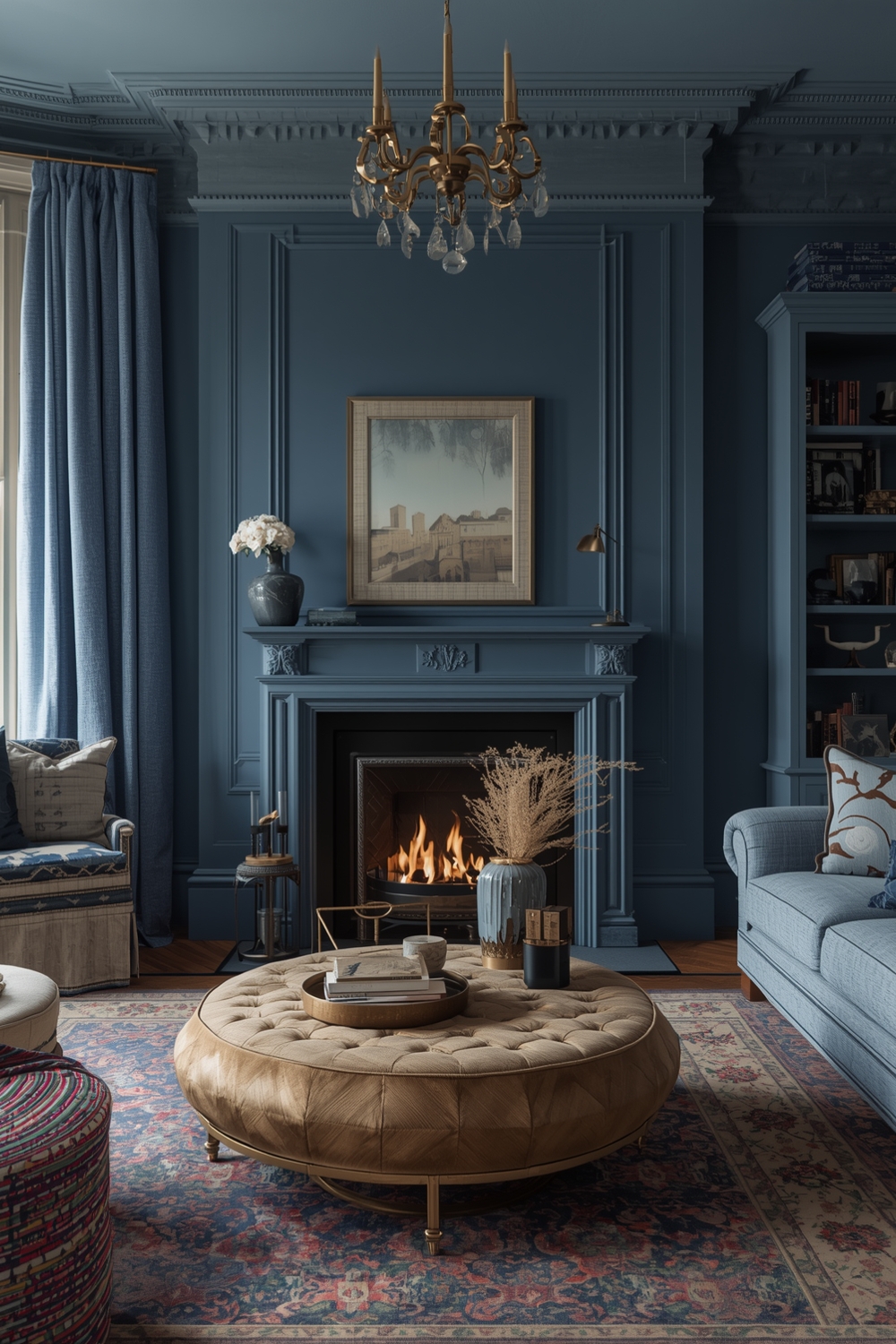
Blue rooms often feel cold because blue is inherently a cool-temperature color. In color theory, warm colors — reds, oranges, yellows — are associated with heat, fire, and sunlight. Cool colors — blues, greens, purples — are associated with water, sky, and shadow. When a room is dominated by cool tones, our brains register the visual temperature of the space before we’ve consciously thought about it, and the result can be a feeling of chill that persists even when the actual room temperature is perfectly comfortable.
But the issue is rarely just the blue paint itself. Most blue rooms that feel uncomfortably cold aren’t suffering from too much blue — they’re suffering from a lack of warm counterbalance. The blue is doing its job; the rest of the room just isn’t doing enough to respond to it. Cool-toned furniture, gray or chrome metal fixtures, bright white trim, cool-toned lighting, hard flooring surfaces without rugs — any one of these elements might be manageable on its own, but combined in a blue room, they compound the coolness until the space feels genuinely unwelcoming.
Lighting is often the single biggest culprit that homeowners overlook. The color temperature of your light bulbs has an enormous impact on how warm or cool a room feels, and in a blue room this effect is dramatically amplified. Cool-white or daylight bulbs (those rated at 5000K or higher) emit a bluish-white light that reinforces the coolness of blue walls rather than offsetting it. The room looks bright and crisp under that light, but it also feels institutional and cold. Warm-white bulbs (around 2700K to 3000K) emit a yellow-amber glow that visually warms the room and softens the blue into something much more livable.
The undertone of the specific blue you’ve chosen also matters enormously. Not all blues are equally cold. Blues with green undertones — teals, aquas, ceruleans — tend to feel colder because the green cools the temperature even further. Blues with slight red or purple undertones — navy, indigo, denim blue, dusty periwinkle — have a warmth built into them that makes them more forgiving in a room setting. If your blue room feels relentlessly cold and you’re considering repainting, shifting to a blue with a warmer undertone might be the most effective single change you can make.
Finally, the amount of natural light in the room plays a significant role. A north-facing room receives cool, indirect light throughout the day — light that emphasizes the cool undertones of blue and provides little of the warm sunlight that might counterbalance them. In south- or west-facing rooms, the warm afternoon and evening sunlight naturally softens the blue and gives the room a golden quality that north-facing rooms simply don’t get. If your blue room faces north, you need to work harder to introduce warmth through artificial lighting and warm-toned materials, because the natural light isn’t going to do it for you.
Key Design Changes That Can Warm Up a Blue Room
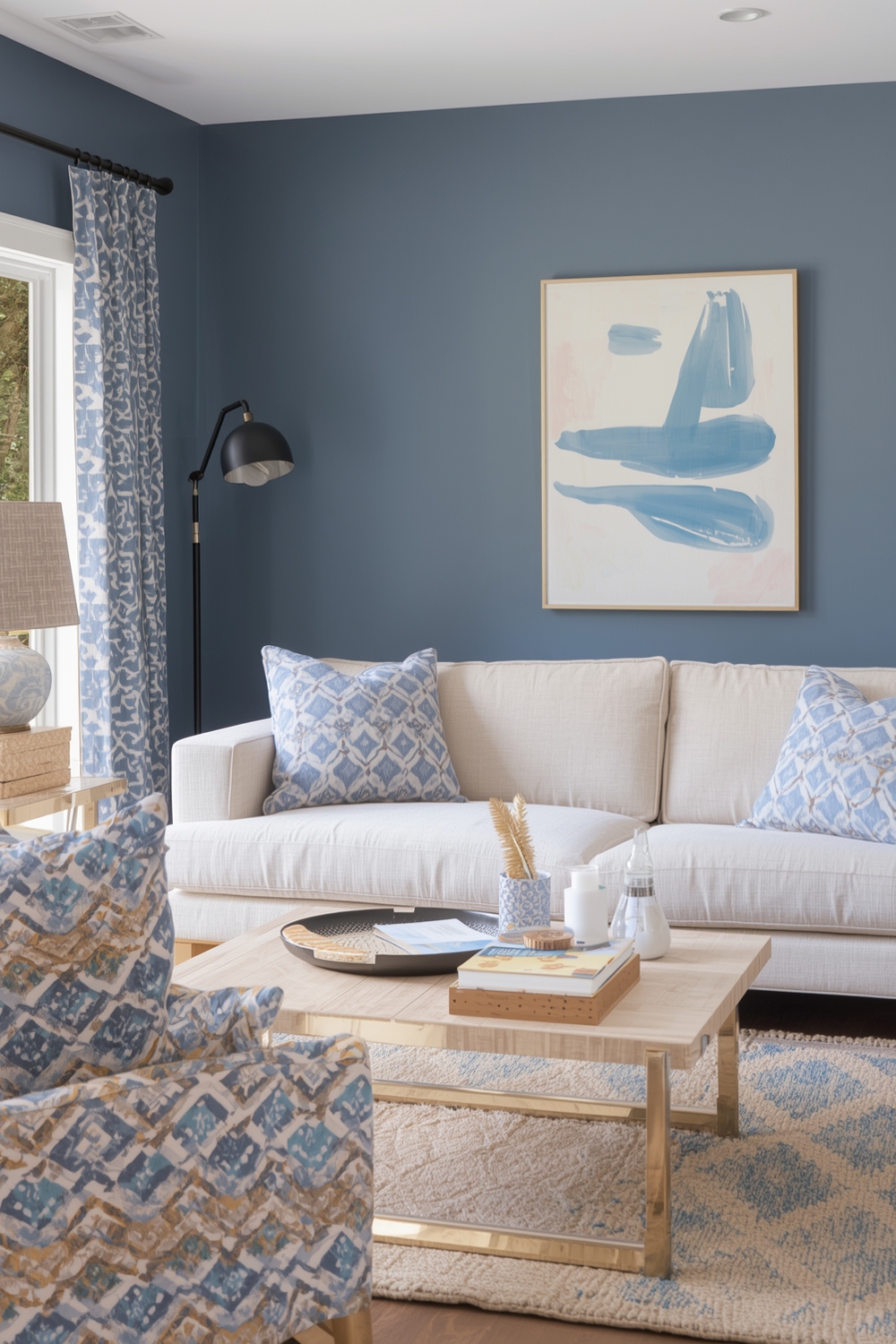
To warm up a blue room effectively, you need to address the coolness on multiple fronts simultaneously. A single warm element — one amber throw pillow in an otherwise cool, hard-surfaced room — isn’t going to move the needle much. Warmth in a blue room is cumulative. It builds across textiles, materials, lighting, and color accents until the combined effect tips the room from cool to cozy. Here are the most impactful changes you can make, in rough order of the effect they’ll have.
Switch to Warm-Toned Light Bulbs Throughout the Room
This is the single fastest and most cost-effective change you can make, and its impact is immediate and dramatic. Replace every bulb in the room with warm-white LED bulbs rated between 2700K and 3000K. In a blue room, this shift alone can transform the entire atmosphere — the walls go from feeling cold and flat to feeling soft and inviting, and the room suddenly reads as somewhere you’d actually want to spend time.
Beyond just swapping bulb temperatures, think about the distribution of light in the room. A single overhead fixture casting light from directly above creates a flat, slightly harsh quality that emphasizes the coolness of blue walls. Layer in table lamps, floor lamps, and if possible, wall sconces to create multiple sources of warm light at different heights. The result is a room that feels bathed in warmth rather than lit from above, and the difference in atmosphere is extraordinary. Candles are another powerful tool here — the flickering amber light of real candles (or high-quality LED candles for practicality) is one of the warmest light sources available and works beautifully in a blue room.
Introduce Natural Wood at Every Opportunity
Wood is one of the most effective antidotes to a cold blue room because it brings warmth, texture, and an organic quality that cool, hard surfaces simply can’t match. If you have the opportunity to introduce or upgrade wood elements in a blue room, this is almost always a worthwhile investment. A warm-toned oak or walnut floor, wood furniture in amber or honey tones, exposed wooden beams, a wooden coffee table or side table, even a collection of wooden accessories on a shelf — all of these things pull the room temperature in a warmer direction.
The key is the undertone of the wood. Cool-toned woods — very pale ash, certain painted or limed finishes, gray-washed wood — won’t help and may actually reinforce the coldness. You want the richer, warmer end of the wood spectrum: walnut, teak, oak with golden undertones, cherry, acacia. These woods have a natural amber and honey quality that creates a genuinely beautiful contrast with blue walls — the kind of contrast you see in Scandinavian interiors, where blue and warm wood have been paired to stunning effect for decades.
Layer in Warm-Toned Textiles
Textiles — rugs, throw blankets, curtains, cushions, upholstered furniture — have a dual function in a cold room. They add visual warmth through their color and texture, and they add actual physical warmth by softening the acoustic and thermal quality of a space. A room with bare floors and minimal soft furnishings always feels colder than one that’s well-layered with textiles, regardless of color. In a blue room, this effect is compounded.
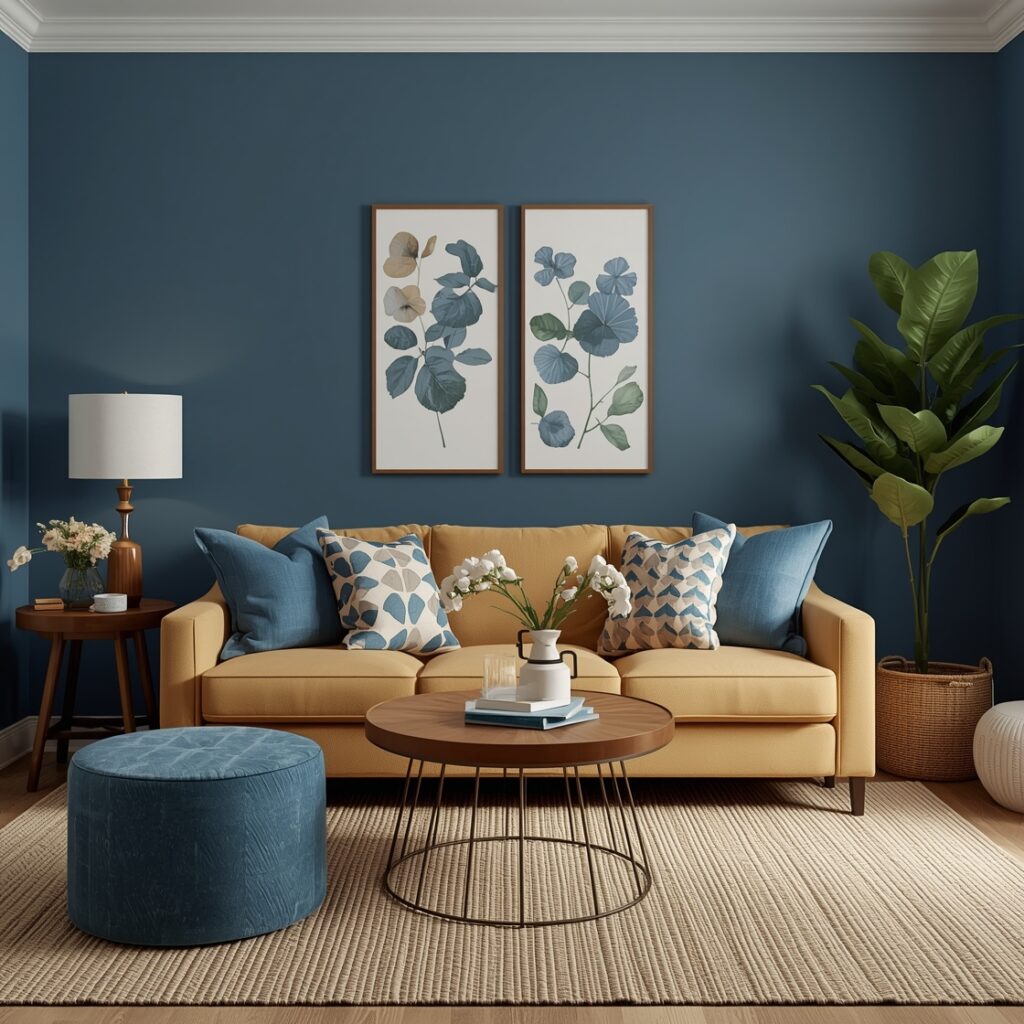
Focus on warm-toned textiles in rust, terracotta, ochre, amber, warm cream, camel, and earthy browns. These colors sit on the opposite side of the color wheel from blue, which means they create a complementary contrast that energizes the room while simultaneously warming it. A rust-toned rug on a light wood floor in a navy blue bedroom can single-handedly transform the atmosphere of the space, introducing warmth at floor level where it’s felt most immediately.
Texture matters as much as color here. Chunky knit throws, bouclé upholstery, velvet cushions, woven wool rugs, linen curtains — these textures read as inherently warm because they evoke tactile softness and comfort. A blue room with smooth, hard surfaces and minimal texture will always feel colder than the same room layered with varied, rich textiles, even if the color palette is identical.
Add an Accent Wall or Warm Neutral to Break the Blue Dominance
If the blue is covering all four walls and ceiling, its dominance can feel overwhelming regardless of what else is in the room. Consider painting one wall — ideally the one behind the main piece of furniture, like the bed or the sofa — in a warm neutral that complements the blue rather than competing with it. Deep terracotta, warm taupe, soft camel, or a rich sandy beige can all work beautifully as a single warm accent wall in a blue room, giving the eye a moment of warmth to rest on and immediately reducing the impression that you’re surrounded by coolness on all sides.
This doesn’t have to mean a dramatic contrast either. A warm plaster-toned white — just slightly creamy and amber rather than bright cool white — can make a significant difference when used on a single wall or as the trim color throughout the room. Many blue rooms are made colder by bright white trim, which intensifies the cool quality of the blue rather than softening it. Switching to a warmer white trim — something in the ivory or linen family — is a small change that pays surprisingly large dividends in terms of overall room warmth.
Bring In Plants and Organic Elements
Living plants are one of the most underused tools for warming up a cool room. The green of lush foliage — particularly the warmer, yellowy-greens of plants like pothos, monstera, or trailing ivy — adds a natural, organic quality to a blue room that immediately softens its coolness. Plants introduce life and movement into a space, and their association with growth and nature makes any room feel more welcoming and less sterile.
Beyond plants, consider other organic materials: a woven rattan chair or pendant light, a ceramic pot in warm earthy tones, a linen table runner, a basket for storage. These natural, tactile materials have an inherent warmth that synthetic or highly processed materials don’t, and they work especially well in blue rooms because they speak a completely different visual language — earthy, natural, and warm — that creates a productive tension with the cool sophistication of blue.
Use Art and Accessories to Inject Warm Color Accents
Art is one of the most flexible and reversible ways to introduce warm color into a blue room, and it’s often the finishing touch that brings everything together. A large painting or print with warm tones — amber sunset, terracotta landscape, golden botanical illustration — hung on a blue wall does remarkable work in shifting the room’s overall temperature perception. The warm colors in the art give the eye a focal point that reads warm, and the contrast between the artwork and the cool blue wall makes both elements look more vivid and intentional.
Smaller accessories — a brass lamp, a set of amber glass vases, copper candleholders, warm ceramic bowls — work similarly at a smaller scale. The key is consistency: don’t introduce one warm accent and leave everything else cool. Distribute warm accents throughout the room so the warmth is present in every part of the visual field, not just in one corner.
Before making any purchases, photograph your blue room and use a photo-editing app to adjust the warmth and temperature of the image. Slide the warmth slider up and observe what happens to the room’s atmosphere — it gives you a genuine preview of the effect that warm lighting, warm materials, and warm accents will create in the actual space, and it can help you decide which changes will have the biggest impact before you spend a dollar.
Bringing It Together: Warmth as a Layered Effect
The most important thing to understand about warming up a blue room is that warmth is not a single intervention — it’s a cumulative effect built across multiple elements. Changing the light bulbs helps. Adding a warm rug helps. Introducing wood helps. Layering in terracotta and amber accessories helps. But the real transformation happens when all of these changes are present simultaneously, because each warm element reinforces the others and together they shift the entire temperature of the room in a way that no single change can achieve on its own.
This is also why the process of warming up a blue room is so satisfying when it works. You’re not covering up the blue or apologizing for it — you’re giving it the right context to be beautiful. Blue at its best is rich, sophisticated, and deeply calming. When it’s surrounded by warmth — amber light, honey wood, terracotta accents, soft textiles — it comes alive in a way that cold, unsupported blue never can. The two temperatures in conversation with each other produce something more interesting and more livable than either would on its own.
Start with the lighting, because it costs the least and changes the most. Then layer in textiles and natural materials. Add warm accents and art. Step back regularly to assess the cumulative effect. You’ll reach a tipping point — a moment when the room stops feeling like a beautiful but cold space and starts feeling like a beautiful, warm one. That’s the goal, and with the right approach, it’s absolutely within reach without abandoning the blue you fell in love with in the first place.