Beige kitchen cabinets are having a serious moment right now, and it’s not hard to understand why. They’re warm, grounding, and versatile in a way that stark white cabinets sometimes aren’t. But here’s what many homeowners discover a little too late: beige cabinets are only as beautiful as the colors surrounding them. Pair them wrong, and the whole kitchen can feel flat, tired, or unintentionally retro. Pair them right, and you’ve got a space that feels sophisticated, current, and deeply livable.
The resurgence of beige in interior design isn’t just a passing trend — it’s a response to years of maximally cool, sterile kitchens that prioritized clean lines over warmth. Homeowners are craving spaces that feel human. Kitchens that feel like they belong to real people with real lives, not magazine spreads. Beige cabinets deliver exactly that, but they require a thoughtful hand when it comes to the rest of the palette. The difference between a beige kitchen that looks curated and one that just looks beige comes down entirely to the choices you make around those cabinets.
In this guide, we’re going to break down exactly which colors, materials, and finishes work best alongside beige kitchen cabinets — covering everything from wall paint to countertops, backsplash tiles, and hardware. Whether you’re renovating from scratch or just looking to refresh what you already have, you’ll walk away with a clear picture of how to make beige work beautifully in your kitchen.
Why Beige Kitchen Cabinets Need the Right Color Pairing
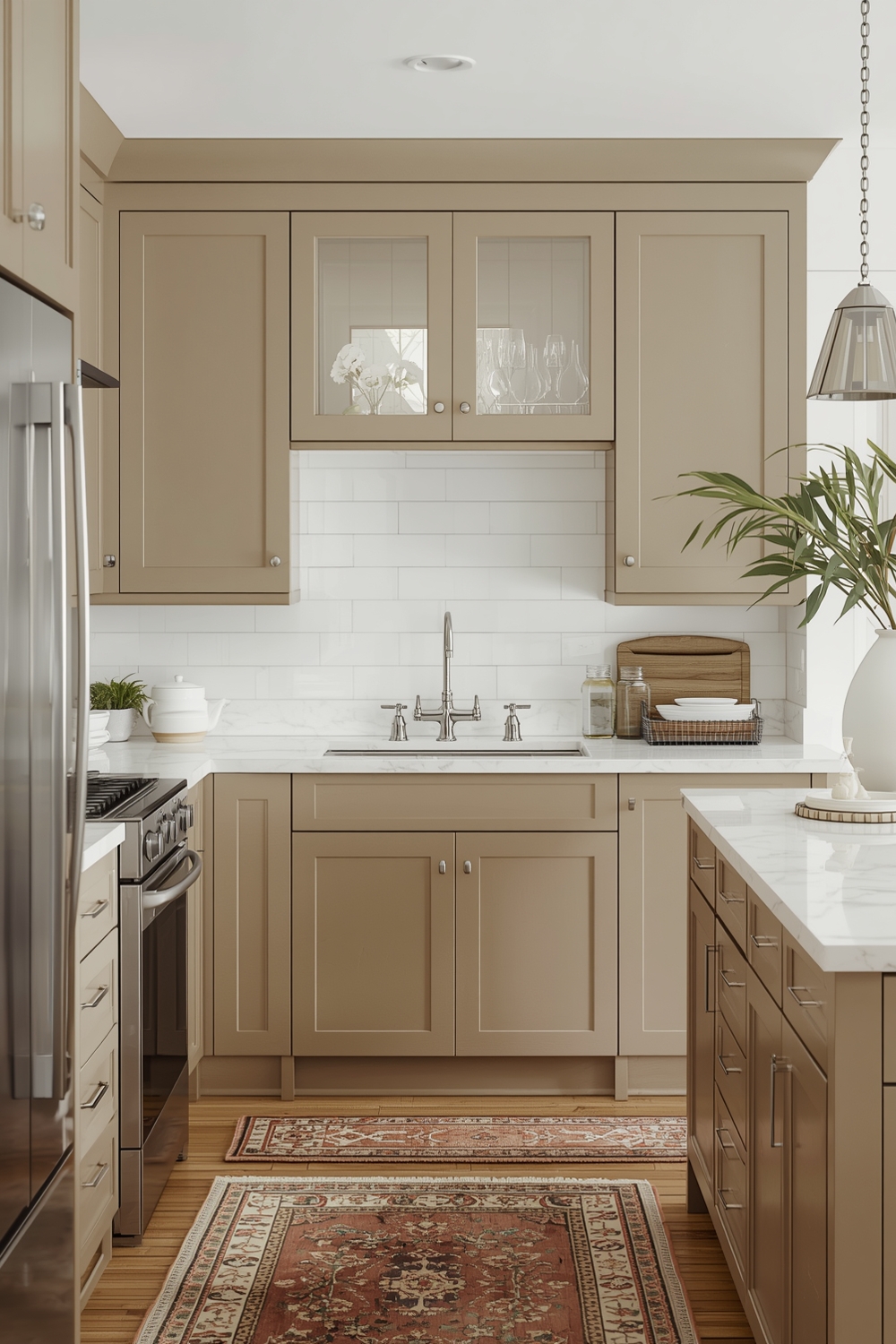
Beige is often misunderstood as a “safe” color — something inoffensive and easy to work with. And while it’s true that beige is more forgiving than some stronger hues, it’s anything but boring when paired thoughtfully. The real challenge with beige is that it exists in an enormous spectrum. Some beiges lean creamy and warm, almost leaning into ivory territory. Others are more taupe-adjacent, sitting closer to gray. Some have distinct pink or peachy undertones, and others pull toward ochre and gold. Where your particular beige sits on that spectrum will determine everything about how you should build the rest of your kitchen’s palette.
The biggest mistake people make with beige cabinets is treating them like a neutral that can handle anything. They can’t. A warm, golden beige cabinet paired with a cool-gray countertop and bright white walls can look completely disjointed — the tones are fighting each other rather than working together. Meanwhile, the right pairing can make beige feel modern and intentional in a way that surprises even skeptics of the color.
Think about the kitchens that stop you mid-scroll on design blogs or Instagram. The ones where you think, “I want to be in that kitchen.” More often than not, those kitchens have layered palettes — they’re not just one color sitting against a white background. They have depth and contrast, but in a coordinated way. There’s a sense that someone made deliberate choices about every element in the room and how it interacts with everything else. That’s exactly the mindset you need to bring to a beige kitchen.
The good news is that beige is genuinely one of the most flexible cabinet colors you can choose, precisely because it has warmth built in. It partners naturally with wood tones, aged metals, earthy ceramics, and rich stone. It can go rustic or refined, traditional or contemporary — the direction you take it depends almost entirely on the supporting colors and materials you choose.
There’s also something worth saying about how beige ages over time. Unlike stark white cabinets that can start to look dingy or yellowed after years of use, beige cabinets tend to age gracefully. The warmth in the color absorbs minor variations rather than highlighting them. This makes beige a genuinely practical long-term choice, not just an aesthetic one — and all the more reason to get the surrounding palette right from the beginning.
Key Factors to Consider When Choosing Colors for Beige Cabinets
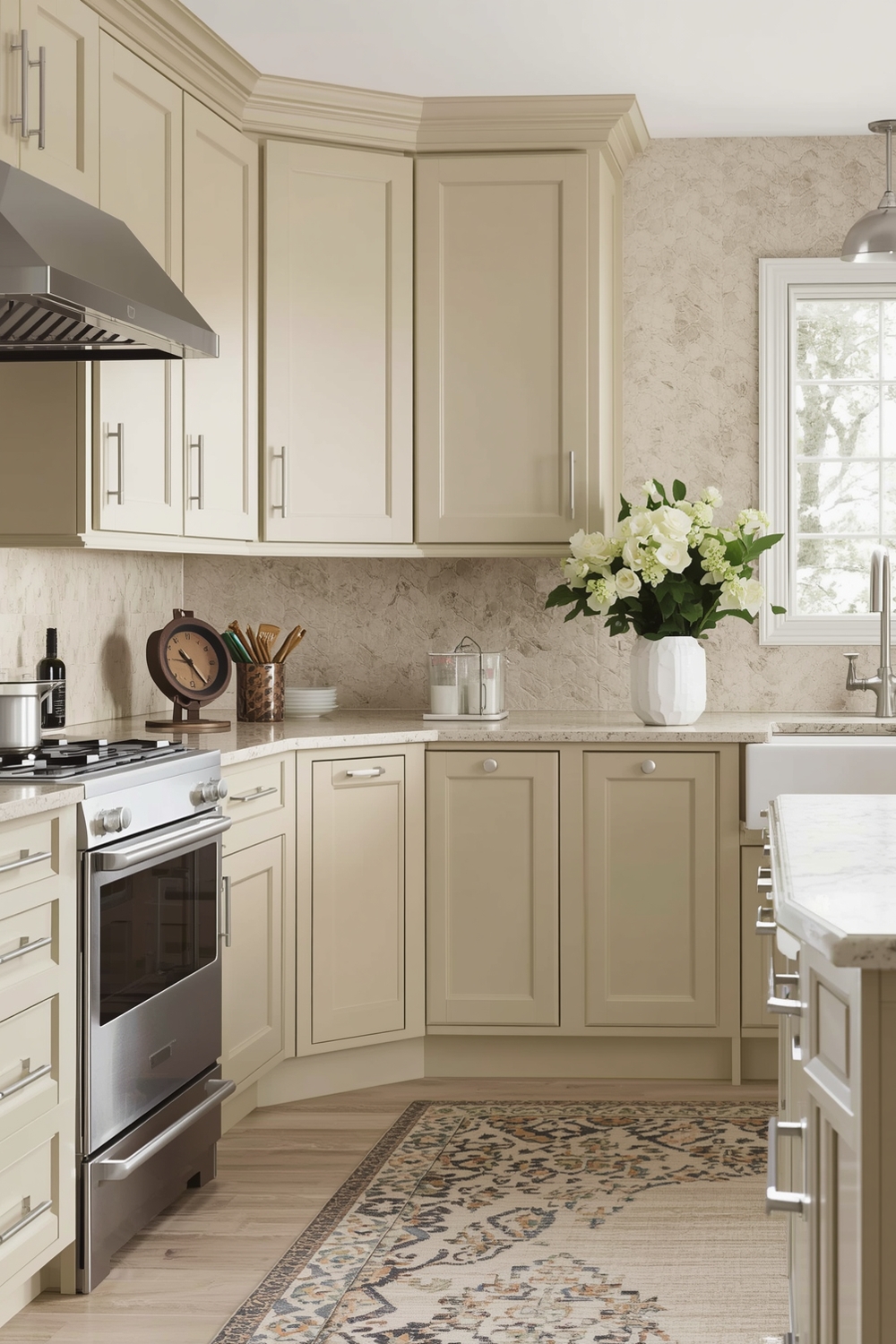
Before you commit to any specific color combination, there are several foundational questions worth asking yourself. These aren’t complicated, but they make a real difference in how the finished room feels.
Identify Your Beige’s Undertone First
This is the starting point for everything. Hold a plain white piece of paper next to your cabinet doors and look carefully at what color the beige actually looks like in comparison. Does it pull warm and golden? Is there a pink or peachy cast? Does it read more grayish and cool? Once you know where your beige sits, you can make much more informed decisions about everything else. Warm, golden beiges need warm companions — think terracotta, sage, soft rust, aged brass. Cooler, grayer beiges can handle a slightly more contemporary palette, like muted greens, soft blues, or warm charcoal.
Wall Color: The Single Biggest Variable
The wall color in your kitchen does more work than almost any other element when it comes to how your beige cabinets look. A well-chosen wall color can make beige cabinets feel fresh and current; a poorly chosen one can flatten them out entirely.
For warm beige cabinets, one of the most reliable wall color choices is a soft sage or muted olive green. These earthy tones feel completely natural next to warm wood-adjacent hues, and they bring in just enough color to keep the room interesting without overwhelming it. If you’re not ready for green, consider a warm greige — a gray-beige hybrid — that reads as neutral but adds a touch of sophistication. Soft terracotta or dusty blush can also be stunning in the right kitchen, especially when balanced with natural textures.
If your beige has cooler undertones, you have a little more latitude to go slightly deeper or bolder with your wall color. A pale slate blue, a muted teal, or even a deep navy as an accent wall can create a beautiful, considered contrast that feels intentional rather than accidental.
One combination that almost always works well is pairing beige cabinets with warm white walls. Not a bright, cool white — but a soft, slightly creamy white that harmonizes with the warmth in the cabinets. Colors like Farrow & Ball’s Wimborne White, Benjamin Moore’s Cloud White, or Sherwin-Williams’ Antique White all tend to work beautifully here because they’re warm enough not to create a jarring contrast, but light enough to keep the room feeling bright and airy.
Countertops: Warmth, Contrast, and Texture
Your countertops are one of the most impactful elements in the kitchen, and their interaction with beige cabinets can make or break the overall look. The good news is that beige pairs well with an impressive range of countertop materials — you just need to be thoughtful about tone and contrast.
For a warm, cohesive look, consider butcher block or natural walnut countertops. The richness of the wood grain plays beautifully against beige cabinetry, adding depth and a sense of organic luxury to the kitchen. If you prefer stone, look for marble or quartzite with warm veining — creamy whites, soft grays, and gold or caramel tones all work wonderfully. White Carrara marble is a classic choice, but be aware that its cool blue-gray veining can read slightly cool against very warm beiges; look for versions with more golden veining if this concerns you.
For a bit more contrast and drama, dark countertops — like honed black granite, dark soapstone, or deep charcoal quartz — can look stunning against beige cabinets. This combination has the advantage of feeling very current and deliberate, avoiding the “beige everywhere” look that makes some people nervous about the color. The contrast between the warm, light cabinets and the deep, dark countertop creates a visual anchor that grounds the whole room.
Backsplash: Where Personality Gets to Shine
The backsplash is often the most expressive element in a kitchen, and with beige cabinets, you have a generous canvas to work with. Because beige is relatively quiet on its own, the backsplash is where you can introduce pattern, texture, or a note of color without things feeling chaotic.
Terracotta or handmade ceramic tiles are an exceptional choice with warm beige cabinets. Their earthy, slightly irregular quality reinforces the organic warmth of the cabinet color while adding artisanal character. Zellige tiles — the Moroccan-style glazed ceramic tiles with subtle variations in color and texture — have become enormously popular in contemporary kitchens for exactly this reason: they have depth and life without being loud.
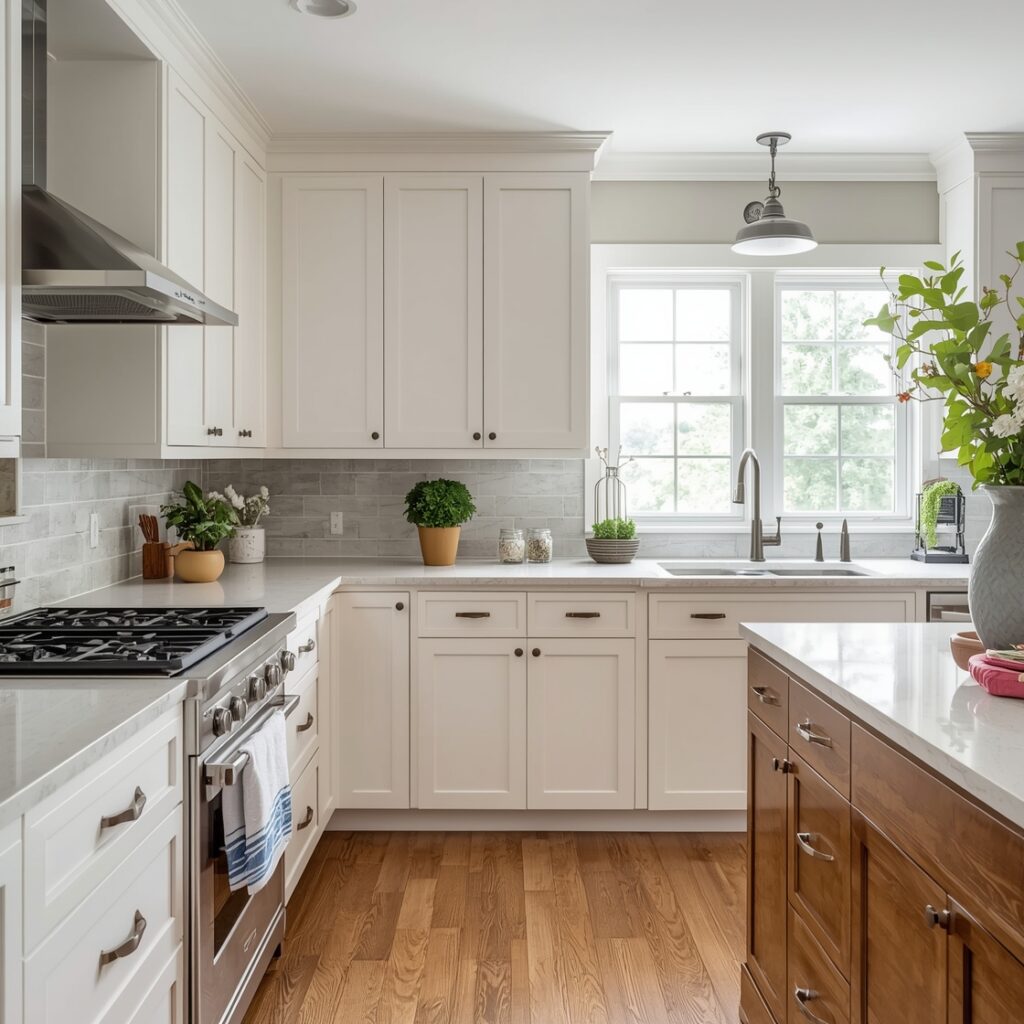
If you prefer a cleaner look, consider a simple subway tile in a warm white or soft cream, laid in a classic brick pattern or a more modern stacked arrangement. This keeps the backsplash from competing with the cabinets while still feeling intentional. For a slightly more elevated option, a large-format stone tile or a slab backsplash that matches your countertop creates a seamless, sophisticated look that’s very much on-trend right now.
Hardware: The Finishing Touch That Changes Everything
Cabinet hardware might seem like a small detail, but it has an outsized effect on how your beige cabinets read in the room. Think of hardware as jewelry for your cabinets — the right piece elevates the whole outfit.
Brass and aged brass hardware is arguably the most natural partner for warm beige cabinetry. The golden warmth of brass reinforces the underlying tones in the beige without looking matching or matchy. It feels expensive and timeless, and it works across a wide range of styles from rustic farmhouse to refined transitional. Unlacquered brass, which develops a natural patina over time, is especially beautiful in this context.
Matte black hardware is another popular choice, and it works particularly well when you’re going for contrast in other elements of the kitchen too — dark countertops, deep wall colors, bold lighting. The crispness of matte black against warm beige cabinets feels contemporary and a little edgy in the best possible way.
Brushed nickel and chrome tend to be less successful with beige, particularly warm beiges, because their cool, silvery tones can create an undertone conflict. If you have your heart set on a silver-toned hardware, look for brushed gold or champagne finishes instead — they have the silvery quality without the cool temperature.
Before finalizing your color palette, bring physical samples of your countertop material, backsplash tile, and paint chips into the kitchen and lay them next to the cabinet doors. See them together in your actual lighting conditions — natural light in the morning, evening artificial light — before making any final decisions. What works in a showroom may look completely different in your specific space.
Putting It All Together: Creating a Beige Kitchen That Feels Designed
There’s a version of a beige kitchen that feels timid and unfinished, and there’s a version that feels warm, considered, and completely alive. The difference isn’t about budget or square footage — it’s about the intentionality of the choices made around those cabinets. When every element in the room — the wall color, the countertops, the tile, the hardware, the lighting — has been chosen with the specific undertone and character of the beige cabinets in mind, the result is a kitchen that feels genuinely designed rather than assembled by accident.
Don’t be afraid of depth and contrast. One of the most common traps with beige kitchens is going too safe with everything else — warm beige cabinets, warm beige walls, light countertops, neutral tile. Without contrast, the room can feel like one continuous, undifferentiated beige field, and that’s when beige gets its undeserved reputation for being boring. Introduce at least one moment of stronger contrast — a deeper wall color, a bold backsplash, dark countertops, or rich hardware — and watch how that single element makes the beige come alive by comparison.
Texture is your other great ally. Because beige is a relatively quiet color, layering in different textures — rough linen, smooth stone, aged metal, matte ceramic — adds the visual interest that might otherwise come from bolder color. A beige kitchen with beautiful textural variety feels rich and complex even if the actual color palette is relatively restrained.
Ultimately, beige cabinets are a gift to work with when you understand their nature. They’re warm, adaptable, and genuinely beautiful — but they reward effort and intentionality. Take the time to understand your specific cabinets’ undertones, make thoughtful choices about every supporting element, and don’t settle for the first combination that seems close enough. The right palette is out there, and when you find it, you’ll know immediately. That’s the thing about a perfectly paired beige kitchen — it doesn’t just look good. It feels right.